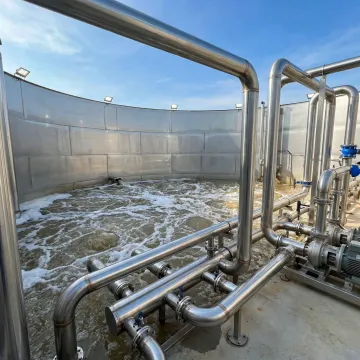
What is the tertiary method of wastewater treatment?
Tertiary wastewater treatment is the advanced treatment stage following primary and secondary treatment. It removes remaining contaminants including nutrients (nitrogen and phosphorus), suspended solids, pathogens, and dissolved organics to produce high-quality effluent. For poultry wastewater, tertiary methods commonly include advanced aeration, chemical oxidation, biological nutrient removal, filtration, and disinfection to meet strict discharge standards or enable water reuse.
What does tertiary wastewater treatment remove?
Tertiary treatment removes contaminants that secondary treatment cannot adequately address. This includes nutrients like ammonia and phosphorus, residual suspended solids, dissolved organics, color, odor-causing compounds, pathogens, and trace contaminants. For poultry processing wastewater, tertiary systems are essential for reducing high nutrient loads, removing residual organic matter, and ensuring compliance with environmental discharge limits for sensitive receiving waters.
What is an advantage of tertiary treatment?
Key advantages include meeting stringent regulatory discharge requirements, protecting sensitive receiving waters, enabling water reuse and recycling, reducing environmental impact, and potentially avoiding costly penalties. For poultry facilities, tertiary treatment also provides operational flexibility, improves public relations through environmental stewardship, and can reduce surcharge fees for high-strength wastewater discharge to municipal systems.
How much does tertiary treatment for poultry wastewater cost?
Tertiary treatment costs vary based on wastewater flow rates, contaminant concentrations, regulatory requirements, and existing infrastructure. Capital costs include equipment, installation, and integration with existing treatment systems. Operating costs depend on energy consumption, chemical usage, and maintenance requirements. Our energy-efficient jet aeration systems can reduce operating costs compared to conventional methods, providing significant long-term savings for poultry operations.
What are typical discharge limits for poultry wastewater after tertiary treatment?
Discharge limits vary by location and receiving water sensitivity but commonly include BOD under 30 mg/L, TSS under 30 mg/L, ammonia-nitrogen under 10 mg/L, total phosphorus under 1-2 mg/L, and fecal coliform limits. Some jurisdictions require more stringent limits. Our tertiary systems are designed to consistently meet or exceed applicable discharge standards while providing operational reliability for continuous poultry processing operations.
Can tertiary treated poultry wastewater be reused?
Yes, properly designed tertiary treatment can produce effluent suitable for various reuse applications including irrigation, cooling tower makeup water, equipment washdown, and certain process water uses. Reuse requirements depend on the specific application and applicable regulations. Our systems can be configured to meet water reuse standards, helping poultry facilities reduce freshwater consumption and demonstrate environmental leadership.
How long does it take to install a tertiary treatment system?
Installation timelines vary based on system size and complexity, typically ranging from several weeks to a few months. Our prefabricated sections enable rapid assembly, and we coordinate closely with facilities to minimize operational disruption. Design and permitting phases precede installation. We provide detailed project schedules during the engineering phase and work efficiently to bring systems online quickly while ensuring thorough commissioning and performance verification.
What maintenance is required for jet aeration tertiary treatment systems?
Our systems require minimal maintenance due to their robust design with no in-basin moving parts. Routine maintenance includes periodic inspection of pumps and blowers (typically outside the tank for easy access), checking system performance parameters, and optional backflushing if needed. We provide comprehensive operator training and detailed maintenance schedules. Most facilities find our systems require significantly less maintenance than comparable diffused aeration or mechanical treatment equipment.