Introduction
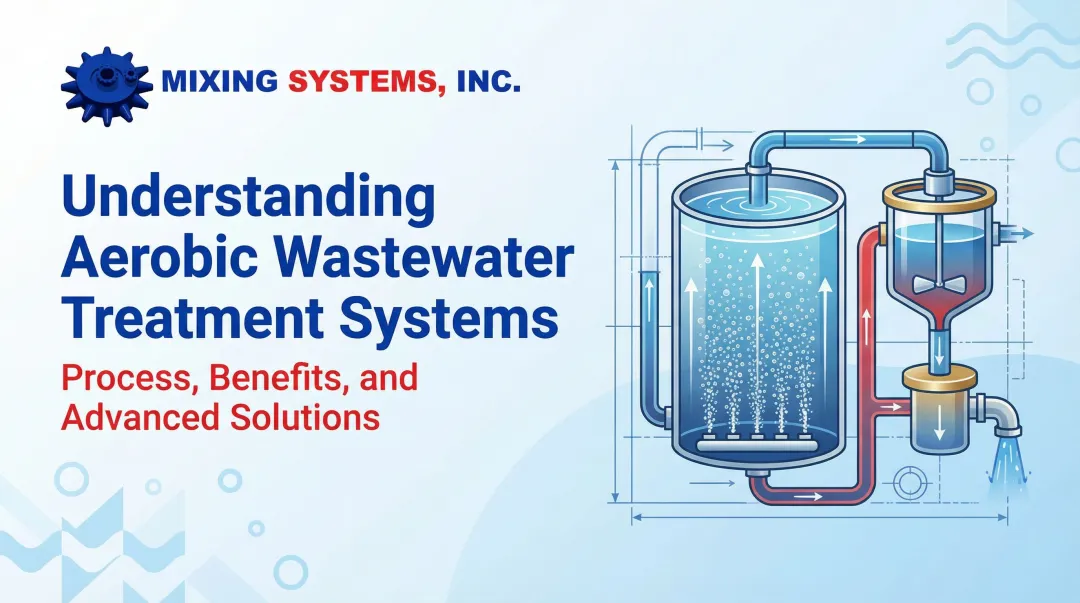
Aerated Wastewater Treatment Systems (AWTS) are essential for municipalities, industrial facilities, and commercial operations requiring effluent quality beyond conventional septic systems.
These engineered systems use continuous aeration to maintain aerobic bacterial populations that break down organic matter, achieving secondary treatment standards—typically BOD and TSS levels at or below 30 mg/L.
Operating these systems requires constant attention to critical parameters:
- Dissolved oxygen levels (2-4 mg/L)
- pH and mixed liquor suspended solids (MLSS)
- Sludge accumulation and bacterial activity
The stakes are high. A power outage lasting 4-6 hours can crash the bacterial colony. Insufficient aeration leads to sludge bulking and permit violations.
According to EPA technical guidance, AWTS require inspections every 2 months and quarterly professional servicing—a stark contrast to passive septic systems.
This guide explains how to operate AWTS correctly in real-world conditions, covering startup protocols, daily monitoring requirements, and the operational discipline needed to maintain consistent treatment performance while avoiding the costly mistakes that compromise both effluent quality and system longevity.
Key Takeaways
- Use aerated systems for discharge permits requiring ≤30 mg/L BOD/TSS
- Maintain continuous power supply—outages exceeding 4 hours destroy aerobic bacteria
- Bacterial colonies require 6-12 weeks to establish with proper seeding and 2-4 mg/L dissolved oxygen
- Weekly monitoring of DO, pH, and solids prevents system failures before they occur
- Monthly sludge management and consistent aeration prevent 90% of system failures
When Should You Use Aerated Wastewater Treatment Systems?
Aerated wastewater treatment systems (AWTS) become necessary when regulatory requirements exceed what anaerobic septic systems can deliver.
Deploy AWTS when:
- Discharge permits mandate NSF/ANSI 40 Class I standards (CBOD ≤25 mg/L, TSS ≤30 mg/L)
- Soil conditions prevent conventional drain field installation
- Groundwater protection requires higher treatment levels than septic systems provide
- EPA secondary treatment standards apply (BOD/TSS ≤30 mg/L with ≥85% removal efficiency)
Common Misapplication Scenarios
AWTS frequently fails when deployed in inappropriate conditions. Understanding these misapplication scenarios helps facilities avoid costly mistakes:
Undersized systems: Sizing based solely on hydraulic capacity ignores organic loading. A system rated for 1,000 gallons per day assumes residential waste strength (<300 mg/L BOD).
Industrial facilities with high-strength waste—food processing, commercial kitchens—require capacity adjustments or pretreatment.
Unreliable power supply: Locations with frequent outages cannot support AWTS. Aerobic bacteria begin dying within 4 hours without aeration; extended outages require complete system restart with re-seeding.
Inadequate operator training: AWTS cannot operate passively. Facilities lacking trained personnel to monitor dissolved oxygen, recognize sludge bulking, and respond to process upsets will experience chronic treatment failures.
Operational Context
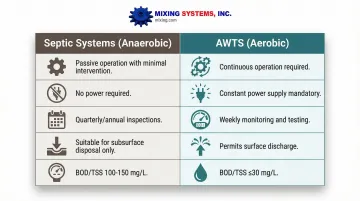
Unlike septic systems that function anaerobically with minimal intervention, AWTS demands:
- Continuous operation: Aeration cannot be switched off without killing bacterial populations
- Consistent flow patterns: Sudden hydraulic surges wash out biomass and upset treatment
- Active monitoring: Weekly parameter testing and daily visual inspections are mandatory, not optional
What You Need Before Using AWTS
Prerequisites and Requirements
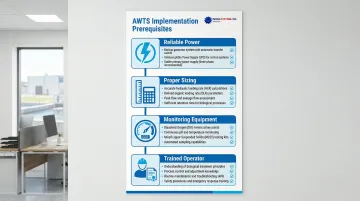
Before implementing an aerated wastewater treatment system, facilities must establish four foundational elements: reliable power infrastructure, proper capacity planning, monitoring capabilities, and trained personnel. Each prerequisite directly impacts system performance and treatment reliability.
Reliable Electrical Power
Industrial aerated systems consume significant power to run blowers and pumps continuously. Power outages exceeding 4-6 hours trigger sludge bulking and bacterial die-off, requiring system restart and reseeding.
Critical installations require:
- Backup generators or uninterruptible power supply (UPS) systems
- Sufficient electrical capacity for continuous blower and pump operation
- Circuit protection with automated alarm systems for power loss notification
Proper System Sizing
Undersizing leads to chronic treatment failure and regulatory non-compliance. Accurate capacity planning requires evaluating both hydraulic and organic loading parameters, not just peak flow volumes.
Key sizing parameters include:
- Daily wastewater volume and peak flow capacity
- Organic loading in pounds of BOD per day
- Minimum 18-24 hours hydraulic retention time for extended aeration
- Surge capacity to handle batch discharge events without washout
Essential Monitoring Equipment
Effective operation depends on continuous monitoring of biological and chemical parameters.
Required monitoring equipment:
- Dissolved oxygen meter for aeration zone measurements (critical parameter)
- pH monitoring to track conditions affecting bacterial activity
- MLSS measurement capability through settleability tests or lab analysis
- Flow measurement to verify actual loading against design capacity
Trained Operator
Operators must understand aerobic biological treatment principles and recognize performance indicators. This includes interpreting DO, pH, and MLSS readings, identifying system stress signals (poor settling, odors, cloudy effluent), and knowing when to adjust aeration rates or waste sludge. Many industrial facilities require state-certified operators depending on discharge volume and permit classification.
How to Use Aerated Wastewater Treatment Systems (Step-by-Step)
Proper AWTS operation follows a defined sequence where each step builds on the previous one. Skipping startup procedures or inconsistent monitoring directly causes treatment failures.
Setup and Preparation
Check Aeration Equipment Capacity
Inadequate aeration is the most common cause of AWTS failure. Confirm:
- Blowers or jet aerators deliver sufficient airflow for tank volume
- Diffusers (if used) are properly positioned for complete mixing
- Systems are correctly sized for deep tank operation and provide the oxygen transfer efficiency needed for your organic loading
Check Hydraulic Configuration
- Inlet/outlet baffles prevent short-circuiting of untreated wastewater
- Clarifier zones are separated from aeration zones
- Flow distribution ensures even treatment across the tank volume
Initiating Use (System Startup)
Once equipment is verified, the startup sequence establishes the biological treatment process.
Startup Procedure
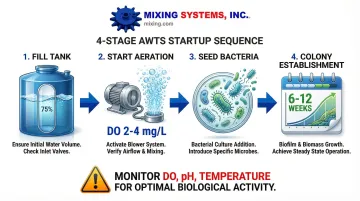
- Fill tank to operating level with clean water
- Start aeration equipment and verify proper operation
- Seed with activated sludge from operating plant or commercial bacterial culture
- Allow 6-12 weeks for bacterial colony establishment before expecting full treatment performance
Critical Startup Parameters
During startup, maintain:
- Dissolved oxygen: 2-4 mg/L continuously in aeration zone
- pH: 6.5-8.5 (add alkalinity if needed)
- Temperature: Bacterial activity slows below 10°C
Warning signs during startup:
- DO levels below 1 mg/L indicate insufficient aeration or overloading
- Excessive white foam (normal initially but should subside as MLSS increases)
- Foul odors suggest anaerobic conditions developing
Operating AWTS Correctly
After startup completes, maintaining stable operating parameters ensures consistent treatment performance.
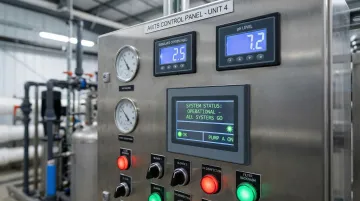
Maintain Core Parameters
| Parameter | Target Range | Critical Threshold |
|---|---|---|
| Dissolved Oxygen | 2-4 mg/L | <1 mg/L causes failure |
| pH | 6.5-8.5 | <6.5 inhibits nitrification |
| MLSS | 2,000-4,000 mg/L | <1,000 mg/L poor treatment |
| MLVSS | 70-80% of MLSS | Indicates active biomass |
Aeration is Non-Negotiable
Continuous aeration maintains aerobic conditions. Stopping aeration:
- Kills aerobic bacteria within hours
- Allows anaerobic conditions and odors to develop
- Requires weeks to restart and may need re-seeding
- Results in permit violations during recovery period
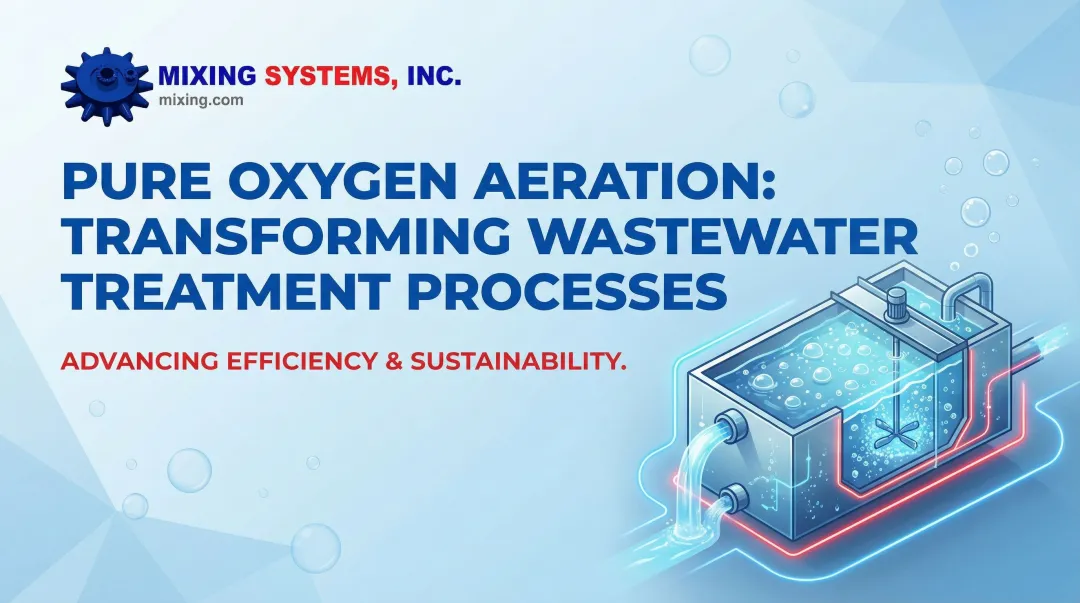
For industrial-scale operations, jet aeration systems deliver significant advantages. They reduce power consumption by up to 40% compared to conventional diffused air systems. This efficiency gain comes from superior oxygen transfer, particularly in deep tank installations where horizontal plume injection maintains longer gas-liquid contact.
Monitoring During Use
Consistent monitoring detects problems before they escalate into treatment failures.
Daily Visual Inspection
Check for:
- Proper aeration: Visible mixing and circulation in aeration zone
- Effluent clarity: Clear effluent indicates good treatment; cloudy effluent signals solids carryover
- Unusual odors: Septic smells indicate anaerobic conditions developing
- Sludge blanket level: Should remain in clarifier zone, not rising
Weekly Testing Requirements
Measure and log:
- Dissolved oxygen: In aeration zone, multiple locations if possible
- pH: Both influent and mixed liquor
- Sludge settling characteristics: 30-minute settleability test in 1-liter cylinder
- Sludge Volume Index (SVI): Target 50-150 mL/g for good settling
Monthly Monitoring
- MLSS concentration: Laboratory analysis or calibrated meter
- Sludge depth in clarifier: Determines wasting schedule
- Equipment inspection: Blower operation, air filters, diffuser condition
Shutting Down or Maintenance Procedures
AWTS requires continuous operation. Plan any maintenance to minimize disruption to biological processes.
Planned Maintenance Protocol
AWTS should never be fully "shut down" during normal use. For maintenance:
- Reduce influent flow if possible by diverting wastewater temporarily
- Maintain minimum aeration to keep bacterial population alive
- Complete maintenance quickly (within 2-4 hours if aeration must stop)
- Resume full operation immediately after maintenance
Sludge Wasting Procedures
Proper sludge management prevents both bulking and solids carryover.
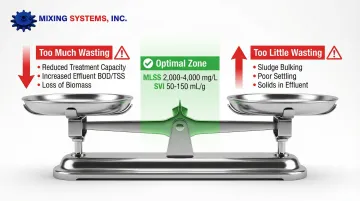
- Waste sludge when MLSS exceeds design range (typically >4,000 mg/L)
- Residential systems: Typically require wasting every 8-12 months
- Industrial systems: May require weekly or continuous wasting depending on loading
- Monitor settleability: Poor settling (SVI >150 mL/g) indicates need for corrective action
Consequences of improper wasting:
- Too much wasting: Reduces treatment capacity, increases effluent BOD/TSS
- Too little wasting: Causes sludge bulking, poor settling, solids in effluent
Where AWTS Is Commonly Used in Practice
Municipal Wastewater Treatment
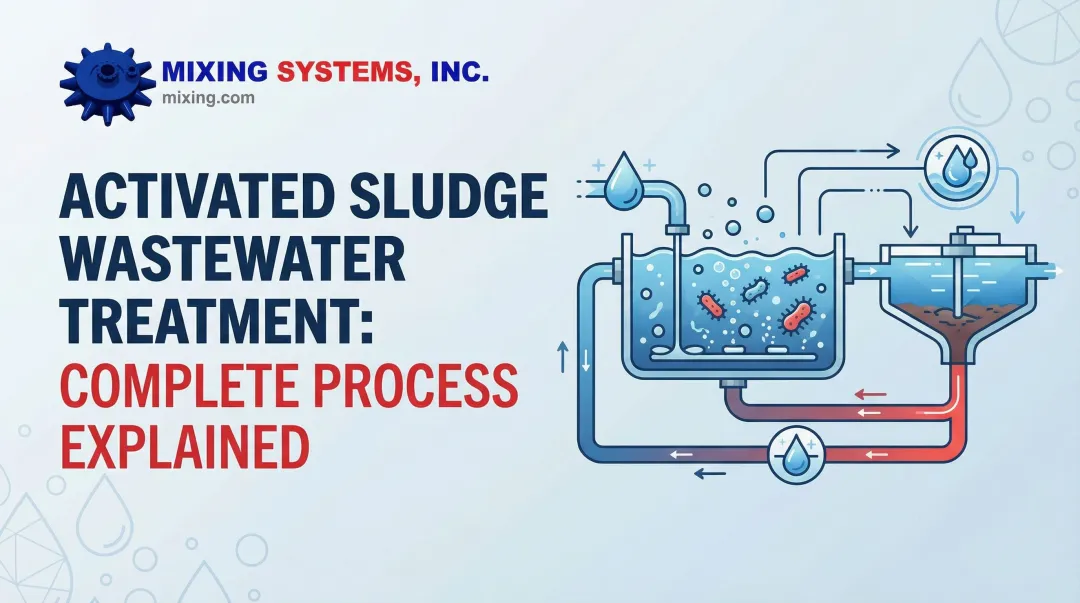
Activated Sludge Process
The most common municipal application treats flows from thousands to millions of gallons per day:
- Extended aeration package plants for small communities (0.002-0.1 MGD)
- Conventional activated sludge for larger municipalities (>1 MGD)
- Flexible aeration configurations for adaptability in flow management
Operational differences at scale include:
- Continuous dissolved oxygen monitoring with automated blower control
- Dedicated operations staff with certified operators on-site daily
- Laboratory facilities for comprehensive testing (BOD, TSS, ammonia, nutrients)
Residential Applications
AWTS replaces conventional septic systems when:
- Soil conditions prevent drain field installation (high water table, poor percolation)
- Lot size cannot accommodate required drain field area
- Discharge to surface water requires higher treatment quality
Typical characteristics:
- Capacity: 400-1,500 gallons per day
- Timer-controlled or continuous aeration
- Quarterly maintenance contracts (typically $300-400/year)
- NSF/ANSI 40 certification required in most jurisdictions
Industrial Facilities
While residential systems operate at small scale, industrial facilities require substantially larger treatment capacity. Industries with organic wastewater commonly deploy AWTS:
- Food processing: Dairies, meat packing, vegetable processing
- Beverage production: Breweries, soft drink manufacturing
- Pharmaceuticals: Biological production facilities
- Chemical manufacturing: Organic chemical synthesis
Industrial operational considerations:
- High-strength waste (BOD >300 mg/L) requires larger systems or pretreatment
- Variable flow and loading patterns demand robust process control
- Toxic shock prevention through source control and equalization
- Regulatory compliance with industrial discharge permits
For large-scale industrial and municipal installations treating high-strength waste, jet aeration and mixing systems provide the thorough mixing and solids suspension needed to prevent dead zones and maintain consistent treatment across the entire tank volume. Mixing Systems, Inc. specializes in these engineered industrial-scale systems for chemical, pharmaceutical, food processing, and municipal facilities—rather than residential-scale equipment.
Best Practices for Using AWTS Effectively
Maintain Adequate Dissolved Oxygen
Target: 2-4 mg/L continuously in aeration zone
- DO below 1 mg/L causes filamentous sludge bulking and poor settling
- DO below 2 mg/L inhibits nitrification (ammonia removal)
- DO above 4 mg/L wastes energy without treatment benefit
Energy efficiency considerations:
Jet aeration systems can reduce power consumption by up to 40% compared to conventional diffused air systems while maintaining superior oxygen transfer efficiency.
For continuous-operation facilities, this energy reduction directly impacts your largest operating cost—electricity.
Establish Routine Monitoring and Record-Keeping
Maintaining optimal DO levels requires consistent monitoring. Written logs provide early warning of problems:
- Track DO, pH, MLSS, and visual observations weekly minimum
- Note trends: gradually declining DO suggests diffuser fouling or increased loading
- Document maintenance activities and equipment performance
- Maintain records for regulatory compliance and troubleshooting
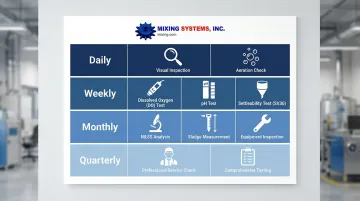
Example monitoring schedule:
- Daily: Visual inspection, check for proper aeration
- Weekly: DO, pH, settleability test
- Monthly: MLSS, sludge depth, equipment inspection
- Quarterly: Professional service, comprehensive testing
Manage Sludge Levels Proactively
Effective monitoring extends beyond dissolved oxygen to sludge management. Test settleability monthly using this procedure:
- Collect a mixed liquor sample in a 1-liter graduated cylinder and allow it to settle for 30 minutes
- Record the settled sludge volume in milliliters
- Calculate SVI using the formula: (Settled volume × 1,000) ÷ MLSS
Waste excess sludge when:
- MLSS exceeds design range (typically >4,000 mg/L)
- SVI exceeds 150 mL/g (indicates bulking)
- Sludge blanket rises in clarifier zone
- Solids appear in effluent
Accumulated sludge reduces:
- Aeration efficiency due to oxygen absorption
- Treatment capacity by reducing active volume
- Settling performance from higher solids loading
Prevent Toxic Shocks
Biological treatment systems depend on living microorganisms that are vulnerable to toxic substances. Control what enters the system:
- Prohibit discharge of oils, greases, and petroleum products
- Limit strong solvents and cleaning chemicals
- Avoid antibiotics and antibacterial products that kill beneficial bacteria
- Use "septic-safe" household products in residential systems
For industrial facilities:
- Implement source control programs to prevent toxic discharges
- Install equalization tanks to reduce concentration spikes
- Consider pretreatment for high-strength or toxic waste streams
- Train employees on proper disposal procedures
Conduct Regular Equipment Maintenance
Preventing toxic shocks protects your biological process, but mechanical reliability requires attention too. Deferred maintenance leads to costly failures:
Blowers and aerators:
- Check operation, noise, and vibration monthly
- Clean or replace air filters per manufacturer schedule
- Inspect belts, bearings, and mechanical components
- For jet aerators, verify nozzle condition and clear any blockages
Clarifier mechanisms:
- Inspect baffles for proper positioning
- Check for sludge accumulation in clarifier zone
- Verify effluent weir condition and level
Pumps and controls:
- Test alarm systems during each service visit
- Verify float switches and level controls
- Inspect pump operation and check valves
Conclusion
Operating AWTS successfully comes down to operational discipline rather than system complexity. The fundamentals are straightforward:
- Maintain dissolved oxygen between 2-4 mg/L
- Monitor key parameters weekly
- Manage sludge levels proactively
- Respond promptly when readings indicate problems
Systems that consistently meet permit requirements share common traits. They have trained operators who understand biological treatment principles, written monitoring logs that track trends, and preventive maintenance schedules that are actually followed.
These operational practices protect both treatment performance and your long-term system investment. The operational shortcuts that save time today—skipping monitoring, deferring maintenance, ignoring warning signs—create expensive failures tomorrow. A crashed system requires weeks to restart, produces permit violations during recovery, and may need costly emergency repairs.
When evaluating aeration systems, consider technologies that deliver efficient oxygen transfer while reducing power consumption—both critical factors for maintaining the dissolved oxygen levels that aerobic bacteria require.
Frequently Asked Questions
What is an aerated wastewater treatment system?
An AWTS uses mechanical aeration equipment (blowers with diffusers or jet aerators) to supply oxygen to aerobic bacteria that break down organic matter. This produces higher quality effluent (BOD/TSS ≤30 mg/L) meeting secondary treatment standards for surface discharge or sensitive groundwater areas.
What is the difference between a septic system and an aerated wastewater treatment system?
Septic systems use anaerobic bacteria in sealed tanks, producing lower quality effluent (BOD/TSS 100-150 mg/L) suitable only for subsurface disposal. AWTS uses continuous aeration for aerobic treatment, producing clearer effluent (BOD/TSS ≤30 mg/L) meeting discharge permits with less drain field area required.
Is water from an aerated wastewater treatment system safe to swim in?
No. AWTS effluent meets BOD/TSS standards but still contains pathogens requiring disinfection (chlorination or UV) before recreational contact. The treated water is used for irrigation, further treatment, or permitted surface discharge—not direct human contact.
What happens if power goes out to an AWTS?
Aerobic bacteria begin dying within hours without aeration. Extended outages (>6-8 hours) crash the system, causing anaerobic conditions and treatment failure. Recovery requires re-seeding and 6-12 weeks to restore full performance and permit compliance.
How often does an AWTS need maintenance?
AWTS requires daily visual checks, weekly parameter testing (DO, pH), monthly sludge monitoring, and quarterly to annual professional servicing. Jet aeration systems reduce maintenance compared to diffused air systems by eliminating in-basin components prone to clogging.
What are the main operating costs of an AWTS?
Electricity for continuous aeration is the largest cost, varying by system size and local rates. Additional expenses include maintenance contracts, periodic sludge removal (8-12 months), replacement parts (blowers, pumps), and monitoring supplies (DO meters, test kits).