Introduction
Selecting the right pond aeration system is a critical engineering decision for industrial wastewater treatment facilities. According to EPA guidelines, aeration typically accounts for 45-75% of a wastewater treatment plant's total energy consumption, making this choice a major economic driver.
The stakes go beyond initial equipment costs. Improper system selection leads to energy waste, treatment failures, regulatory violations, and expensive emergency retrofits. Clean Water Act penalties reaching $4.1 million demonstrate the financial risk of inadequate aeration design.
Key Takeaways
- Aeration systems introduce oxygen for biological treatment and prevent stratification in industrial wastewater
- System selection hinges on pond depth, organic loading, oxygen transfer efficiency, and energy costs
- Surface aerators work for shallow ponds; jet and diffused systems excel in deep tanks
- Calculate oxygen demand based on BOD removal rates, temperature, and treatment objectives
- Jet aeration eliminates in-basin moving parts and cuts energy costs up to 40% in deep applications
What is a Pond Aeration System?
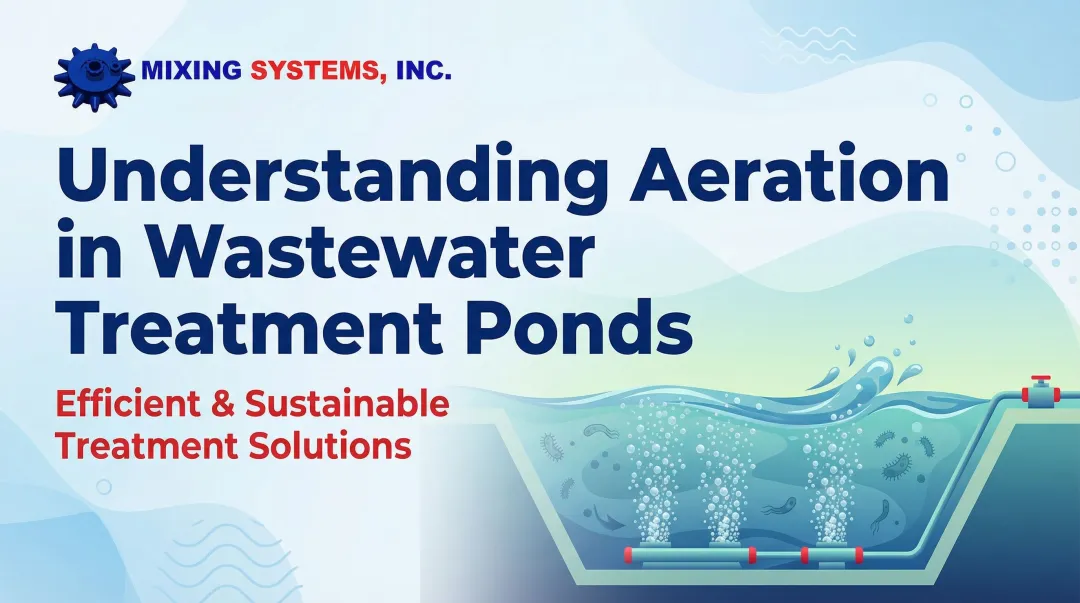
A pond aeration system is engineered equipment that introduces dissolved oxygen into wastewater treatment ponds, lagoons, or tanks to support aerobic biological processes that break down organic matter.
These systems provide oxygen for microorganisms to metabolize contaminants while creating mixing and circulation to prevent stratification and dead zones.
For industrial applications, wastewater aeration differs fundamentally from decorative pond systems. Industrial systems must handle:
- High-strength BOD concentrations
- Variable flow rates
- Deep tanks (often 15-30 feet)
- Challenging chemical constituents
The EPA recommends maintaining a minimum dissolved oxygen level of 2.0 mg/L at all times for effective treatment, with 1.0 mg/L as the absolute minimum during peak loading to prevent anaerobic conditions and odor problems.
Core Components of Aeration Systems
All aeration systems consist of four fundamental components working together to deliver oxygen throughout the treatment area.
Oxygen Generation and Delivery
Air compressors or blowers generate pressurized air for diffused systems, while mechanical devices draw atmospheric oxygen directly into water for surface and jet aerators.
Ideal blower control systems use Variable Frequency Drives (VFDs) to match airflow directly to process demand, preventing energy waste from over-aeration. Operating pressure depends on diffuser depth and system head loss—fine-bubble systems typically require higher pressures due to membrane pore resistance.
Distribution Network
Piping systems, manifolds, and controls transport air or oxygen to discharge points throughout the treatment area. Proper design accounts for pressure drops, isolation capabilities for maintenance, and flexibility to adjust delivery patterns as loading conditions change.
Mixing and Dispersion Elements
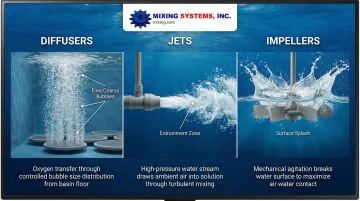
The mechanisms that create bubble formation or water turbulence vary by technology:
- Diffusers produce fine or coarse bubbles through membrane pores
- Jets create high-velocity entrainment zones that mix air and water
- Impellers generate surface splash patterns for atmospheric oxygen contact
Each approach affects oxygen transfer efficiency and mixing intensity differently.
Control and Monitoring Systems
Instrumentation for dissolved oxygen monitoring, flow measurement, and automated control systems optimize oxygen delivery based on real-time demand. Automated DO control systems can reduce energy consumption by 10-20% by preventing over-aeration during low-load periods.
Operators should monitor DO at the aerated cell outlet daily and inspect airline pressure gauges regularly to detect fouling or system problems early.
Types of Pond Aeration Systems
Four primary aeration technologies dominate industrial wastewater treatment, each with distinct performance characteristics and optimal applications.
Surface Aerators
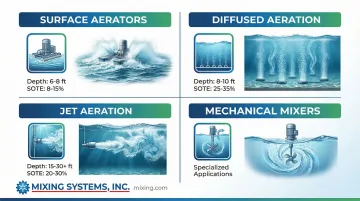
Floating or platform-mounted mechanical units create splash and spray patterns that transfer oxygen at the water surface. EPA design data shows surface aerators typically operate in ponds averaging 6.3 feet (1.9 m) deep.
While effective in shallow applications, they face limitations in deeper tanks where mixing energy cannot reach the bottom zone. Surface aerators are also susceptible to ice formation on floats and impellers during freezing weather, which compromises performance and damages equipment in cold climates.
Diffused Aeration Systems
Bottom-mounted diffuser technology uses fine or coarse bubble diffusers connected to blowers. Fine-bubble diffusers achieve SOTE of approximately 6.9% per meter of depth, roughly double the efficiency of coarse-bubble systems at 3.0% per meter. These systems suit variable depth applications, with optimal design depths between 8 and 10 feet where bubble residence time maximizes oxygen transfer.
Fine-pore diffusers are susceptible to fouling from biofilms and inorganic precipitates, requiring cleaning intervals of 2-4 years or more frequently in high-strength industrial waste.
Jet Aeration Systems
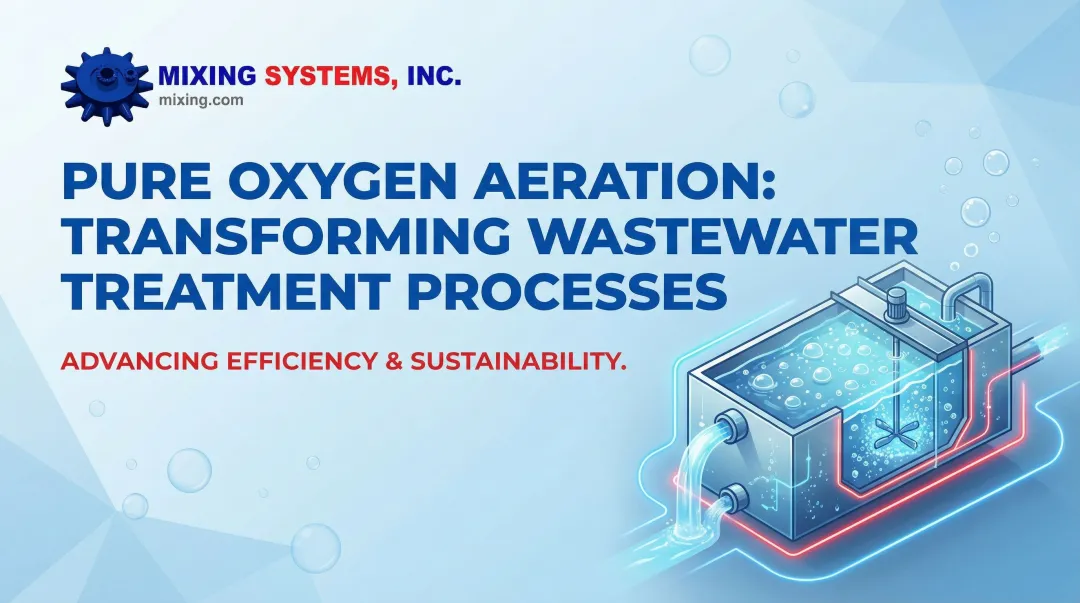
Submerged jet technology uses high-velocity water jets to entrain and mix air, creating multiple oxygen transfer zones throughout the basin. Installed near the bottom of basins, these systems excel in deep tanks exceeding 15 feet, maximizing bubble exposure time and mixing intensity.
Key advantages include:
- No in-basin moving parts—all mechanical components remain outside the tank for easy service
- Superior oxygen transfer through horizontal plume injection that maintains gas/liquid interface longer than vertical bubble rise
- Reduced maintenance since there are no submerged motors or diffusers to clean
Mechanical Mixers and Aspirators
Systems that combine mechanical mixing with air aspiration serve specialized applications in pre-aeration or equalization basins where complete mixing is the primary objective rather than maximum oxygen transfer efficiency.
Key Design Considerations When Selecting an Aeration System
Proper aeration system selection requires analyzing multiple connected factors that affect both treatment performance and lifecycle costs. These considerations must be evaluated together, not in isolation, as decisions in one area directly impact requirements in others.
Pond Dimensions and Configuration
Pond surface area, depth, and shape determine which aeration technologies are feasible and how many units are required. Shallow ponds under 8 feet favor surface aeration, while deep tanks of 15-30 feet require submerged systems like jet aeration or fine-bubble diffusers to effectively oxygenate the full water column.
Irregular pond shapes, multiple cells, or baffled configurations require careful analysis of mixing zones and potential dead spots. Visual inspection of aeration patterns is critical to identify areas of poor circulation where solids may settle or anaerobic conditions develop.
Wastewater Characteristics and Loading
BOD concentration, flow variability, temperature ranges, and presence of industrial constituents determine oxygen demand calculations. A common rule of thumb is that 1.5 kg of O₂ is required to treat 1 kg of BOD₅, though this increases significantly when nitrification is required (approximately 4.6 kg O₂ per kg of ammonia-nitrogen converted to nitrate).
Calculate peak oxygen requirements using the formula:
O₂ required (lb/day) = BOD removed (lb/day) × oxygen factor (1.5-2.0)
High-strength industrial waste, pH extremes, or toxic compounds may require specialized aeration approaches or pre-treatment to protect biological processes.
Oxygen Transfer Efficiency Requirements
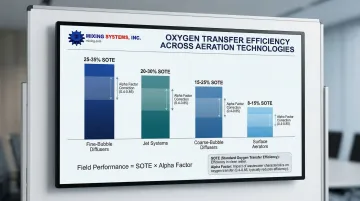
Standard Oxygen Transfer Efficiency (SOTE) indicates the percentage of oxygen dissolved in clean water at standard conditions (20°C, 1 atm, 0 mg/L DO). Efficiency varies significantly by technology:
- Fine-bubble diffusers: 25-35% SOTE (6.9% per meter depth)
- Coarse-bubble diffusers: 15-25% SOTE (3.0% per meter depth)
- Surface aerators: 8-15% SOTE
- Jet systems: 20-30% SOTE
Actual field performance requires correction for wastewater characteristics using alpha factors. Fine-bubble systems typically see alpha factors of 0.4-0.7 in wastewater, while coarse-bubble systems maintain higher alpha factors of 0.65-0.85 because larger bubbles are less affected by surfactant coating.
In high-strength industrial wastewater, alpha factors can drop even lower, significantly reducing field performance compared to clean water specifications.
Energy Consumption and Operating Costs
Energy costs represent 60-80% of total lifecycle costs for aeration systems, making efficiency analysis the most critical economic factor.
Compare systems using pounds of oxygen transferred per kilowatt-hour (lb O₂/kWh) under actual operating conditions, not just clean water specs.
Lifecycle cost analysis should include:
- Capital costs (initial equipment investment)
- Energy costs over 15-20 years (typical equipment lifespan)
- Maintenance costs (labor, parts, system downtime)
- Replacement expenses (major components, full system)
A system with lower capital cost but poor efficiency will cost significantly more over its operational life. These economic factors directly influence operational flexibility needs.
Operational Flexibility and Reliability
Multiple aeration units allow for maintenance, provide redundancy during equipment failure, and enable variable capacity operation to match changing loads. Consider parallel versus series operation, isolation capabilities, and emergency backup power requirements.
Seasonal operation requirements matter significantly. While oxygen solubility increases in cold water (beneficial), biological activity slows substantially, potentially requiring longer detention times or higher biomass concentrations to maintain treatment levels.
Maintenance Requirements and Accessibility
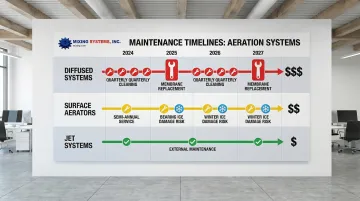
Maintenance demands vary dramatically by system type:
- Diffused systems: Quarterly to annual diffuser cleaning, periodic membrane replacement every 2-4 years
- Surface aerators: Bearing and seal service, potential for ice damage in winter
- Jet systems: Primarily external blower and pump maintenance, minimal in-basin service
Systems with submerged components requiring diver access or pond dewatering have significantly higher maintenance costs and operational disruption. Systems with all mechanical components located outside the treatment basin—such as jet aeration systems—allow service without interrupting treatment and eliminate submersible motor failures.
How Mixing Systems, Inc. Can Help
Mixing Systems, Inc. brings over 40 years of specialized engineering expertise in jet aeration and jet mixing systems for industrial wastewater applications.
Founded in 1985 by engineers with extensive experience in design, application, and manufacturing of jet systems, the company has supplied equipment to hundreds of installations worldwide across chemical, pharmaceutical, food processing, pulp & paper, and municipal sectors.
The company's submerged jet aeration technology addresses the most challenging design requirements:
- Energy savings up to 40% compared to conventional aeration methods through superior oxygen transfer efficiency in multiple transfer zones
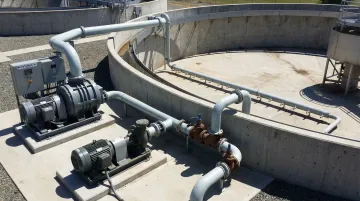
- No in-basin moving parts—pumps and blowers sit outside tanks for easy service, eliminating submersible motor failures and reducing maintenance to external equipment only
- Deep tank operation capability exceeding 30 feet with horizontal plume injection that maintains gas/liquid interface longer than conventional diffused air systems
- Custom design services using computer-aided engineering to tailor nozzle placement, mixing patterns, and oxygen distribution to your pond configuration and wastewater characteristics
- Prefabricated modular sections for easier installation and optional pneumatic backflush systems to prevent clogging in difficult applications
Major clients include BASF, Dow Chemical, DuPont, Pfizer, Cargill, Tyson Foods, and Anheuser Busch. Mixing Systems, Inc. has delivered measurable results across diverse industrial applications and challenging wastewater conditions.
The company's engineering team provides detailed analysis, performance projections, and lifecycle cost comparisons to support informed system selection decisions.
Conclusion
Selecting the right pond aeration system requires balancing treatment requirements, energy efficiency, capital costs, and operational complexity. The best system for your facility depends on specific site conditions—pond depth and configuration, wastewater characteristics and loading patterns, and long-term operational goals—not simply initial equipment cost.
Energy-efficient upgrades can deliver payback periods under 3 years when aeration represents 50-70% of plant energy consumption. Before committing to full-scale implementation, consider these final steps:
- Partner with manufacturers who provide engineering analysis, performance guarantees, and lifecycle cost projections
- Conduct pilot testing for large installations to validate design assumptions
- Request computer-aided design modeling to assess system performance under your specific conditions
Companies like Mixing Systems, Inc., with over 40 years of jet aeration engineering experience, can help evaluate these factors and develop custom solutions matched to your facility's requirements.
Frequently Asked Questions
How do I calculate the oxygen requirements for my pond aeration system?
Use the formula: O₂ (lb/day) = [Influent BOD - Effluent BOD (mg/L)] × Flow (MGD) × 8.34. Apply safety factors of 1.5-2.0 to account for peak loads and system variability.
What is the difference between Standard Oxygen Transfer Efficiency (SOTE) and actual field performance?
SOTE is measured in clean water at 20°C and sea level. Actual wastewater performance requires corrections for temperature, altitude, and water quality factors. Field efficiency typically runs 40-70% of clean water SOTE.
Can I use surface aerators in deep ponds or lagoons?
Surface aerators work best at depths of 8-12 feet due to mixing limitations. Deeper systems require submerged technologies like jet aeration to oxygenate the full water column and maintain solids suspension.
What maintenance is required for different types of aeration systems?
Diffused systems need periodic cleaning and membrane replacement every 2-4 years. Surface aerators require bearing service and freeze protection. Jet systems like those from Mixing Systems, Inc. need only external blower and pump maintenance with no in-basin service.
How does cold weather affect aeration system performance and selection?
Surface aerators risk ice damage in freezing conditions. While oxygen solubility increases in cold water, biological activity slows, requiring systems sized for winter conditions. Submerged aeration is preferred in freezing climates.
What is the typical payback period for upgrading to a more energy-efficient aeration system?
Energy savings of 30-40% on aeration (50-70% of plant energy) typically yield payback periods of 3-7 years, depending on electricity rates, operating hours, and capital cost differential.