Introduction
Wastewater treatment facilities spend 50-75% of their total energy budget on a single process: aeration. That staggering consumption drives costs across municipal plants, industrial operations, and lagoon-based systems worldwide.
Many operators struggle with optimizing dissolved oxygen levels, selecting appropriate aeration technology, and managing operational expenses. These challenges create energy waste, treatment inefficiencies, and effluent quality problems that threaten compliance.
Understanding how aeration works and which systems match specific pond configurations helps operators balance treatment effectiveness with energy efficiency.
Key Takeaways
- Aeration introduces oxygen into wastewater ponds to support aerobic microorganisms that degrade organic pollutants
- Oxygen transfer methods vary in efficiency, affecting energy costs and treatment performance
- Different aeration technologies offer distinct energy efficiency and mixing profiles
- Proper aeration maintains 1-4 mg/L dissolved oxygen, prevents odors, and ensures compliance
What Is Aeration in Wastewater Treatment Ponds?
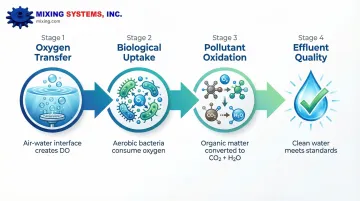
Aeration is the process of introducing air or oxygen into wastewater to enable biological oxidation by aerobic microorganisms. These microorganisms consume organic matter—measured as Biochemical Oxygen Demand (BOD) and Chemical Oxygen Demand (COD)—and convert it into carbon dioxide, water, and new cell biomass.
The operational gap aeration solves: Untreated wastewater contains insufficient dissolved oxygen to support the biological processes needed to break down pollutants. Without adequate oxygen, wastewater turns anaerobic, producing hydrogen sulfide odors, accumulating sludge, and generating effluent that fails to meet discharge standards.
Properly designed aerated lagoons achieve 75-85% BOD removal, meeting secondary treatment requirements.
Common misconceptions about aeration:
- Aeration is not simply mixing water, though mixing occurs as a byproduct
- It's not a standalone treatment but creates aerobic conditions that enable biological processes
- It serves as the foundation that allows microbial communities to function effectively
Despite advances in treatment technologies, aeration remains the backbone of most wastewater systems. Biological oxidation is the most cost-effective method for removing organic pollutants at scale.
Aeration systems vary by pond type and treatment objective:
- Facultative lagoons use partial aeration to maintain an aerobic surface layer over an anaerobic bottom zone
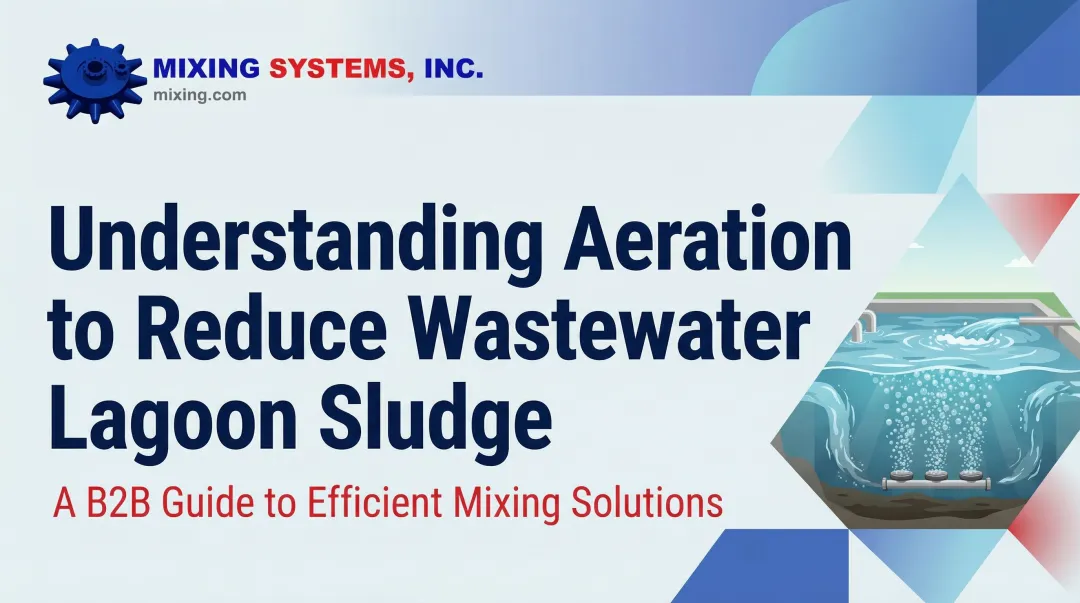
- Aerated lagoons use continuous aeration to keep solids fully suspended in the water column
- Oxidation ditches combine aeration with circulation patterns to optimize contact time and treatment efficiency
How Does Aeration Work in Wastewater Treatment Ponds?
Aeration operates through a defined sequence: oxygen transfer, biological uptake, pollutant oxidation, and effluent quality improvement. Each stage depends on maintaining proper dissolved oxygen levels throughout the pond.
Oxygen Transfer Mechanism
Aeration systems transfer atmospheric oxygen (containing 21% O₂) into wastewater by creating an air-water interface. This occurs through:
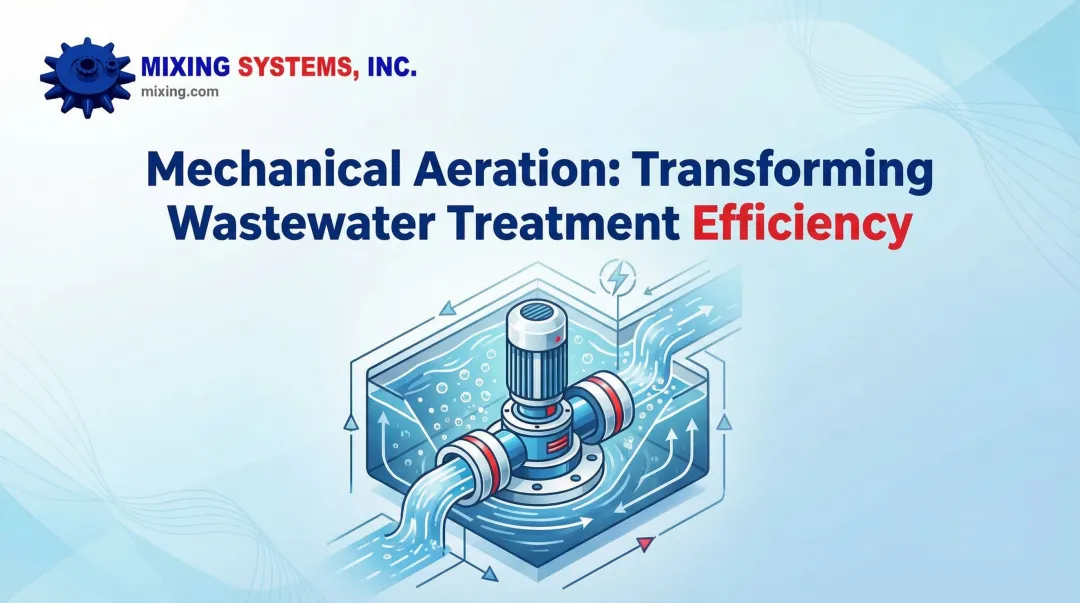
- Surface agitation — mechanical aerators spray water into the air, creating droplets that absorb oxygen
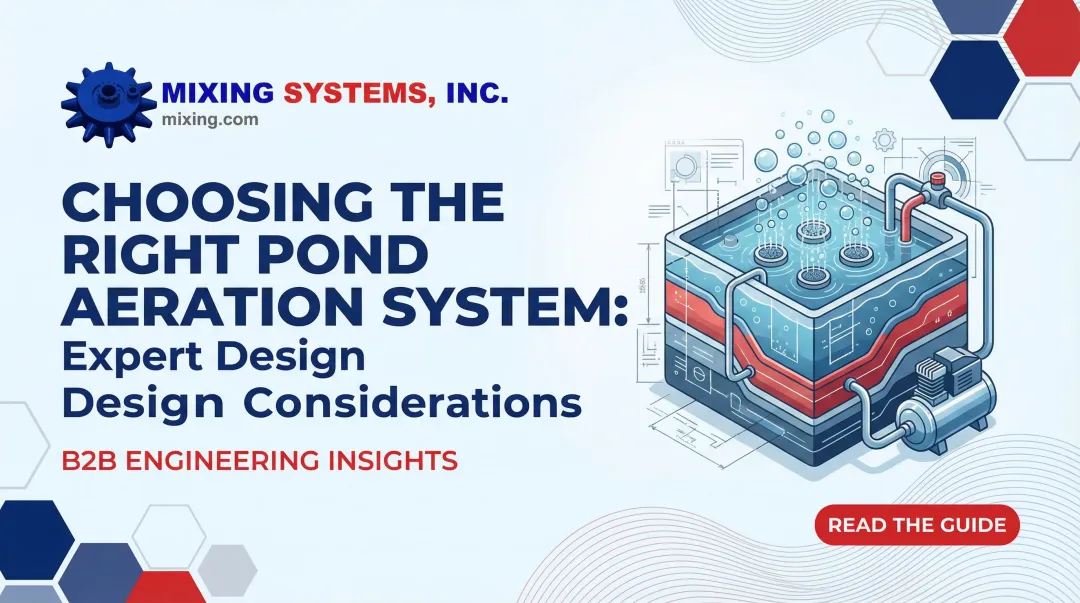
- Submerged bubble diffusion — compressed air is released through diffusers on the pond floor, creating rising bubbles that transfer oxygen
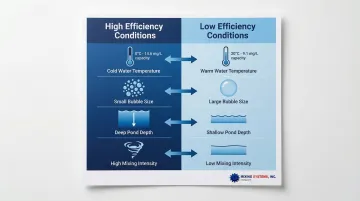
Oxygen transfer efficiency depends on several factors:
- Water temperature — cold water holds more dissolved oxygen (14.6 mg/L at 0°C vs. 9.1 mg/L at 20°C), meaning systems must work harder in summer
- Bubble size — smaller bubbles provide larger surface area per volume and rise more slowly, increasing contact time
- Mixing intensity — turbulence enhances oxygen transfer but requires more energy
- Pond depth — deeper ponds maximize contact time for rising bubbles, improving diffused system efficiency
Biological Uptake and Oxidation
With oxygen successfully dissolved in the water, aerobic bacteria and microorganisms consume it while metabolizing organic pollutants. The biological oxidation process converts BOD/COD into harmless byproducts.
Different treatment objectives require different DO levels:
- 1-2 mg/L for facultative ponds with partial mixing
- 2-4 mg/L for activated sludge processes and fully aerated lagoons
- Above 2 mg/L to support nitrification (ammonia oxidation)
Maintaining adequate DO prevents the system from going anaerobic, which causes odors, treatment failure, and effluent violations.
DO levels below 0.5 mg/L indicate anaerobic conditions that compromise treatment performance.
Mixing and Solids Suspension
Aeration provides dual functions: it supplies oxygen AND creates mixing currents that keep biomass suspended in the water column. Proper mixing prevents solids from settling and creating dead zones where treatment doesn't occur.
Suspension-mixed lagoons require higher energy input to maintain all solids in suspension, functioning similarly to activated sludge systems.
Facultative lagoons intentionally allow some settling with lower aeration intensity, creating a stratified system where aerobic treatment occurs at the surface and anaerobic digestion happens in the bottom sludge layer.
Types of Aeration Systems for Wastewater Ponds
Selecting the right aeration system depends on pond depth, treatment objectives, and energy budget. Consider whether your facility needs oxygen transfer alone or combined oxygen transfer with mixing capability.
Floating Surface Aerators
Floating surface aerators use motor-driven impellers mounted on floats to spray water into the air. Droplets absorb oxygen before falling back into the pond.
Advantages:
- Easy installation and portability
- Effective in shallow ponds (1.5-3m deep)
- Lower capital cost than other systems
- Simple mechanical design
Disadvantages:
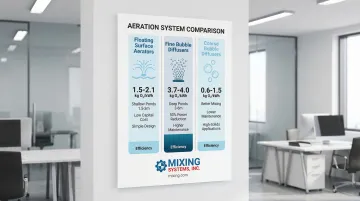
- Lower oxygen transfer efficiency of 1.5-2.1 kg O₂/kWh
- Limited mixing depth penetration
- Susceptible to icing in cold climates
- Higher long-term energy costs
Submerged Diffused Aeration
Diffused aeration systems use blowers to push compressed air through submerged diffusers placed on the pond floor or suspended laterally.
Fine Bubble Diffusers:
- Produce bubbles 1-3mm in diameter
- Offer highest oxygen transfer efficiency of 3.7-4.0 kg O₂/kWh
- Greater surface area maximizes oxygen absorption
- Can reduce power consumption by 50% compared to coarse bubble systems
- Require regular maintenance to prevent diffuser fouling
- Best suited for deeper ponds (3-6m)
Coarse Bubble Diffusers:
- Produce larger bubbles with lower transfer efficiency (0.6-1.5 kg O₂/kWh)
- More resistant to clogging in high-solids applications
- Provide better mixing capability
- Lower maintenance requirements
Jet Aeration Systems
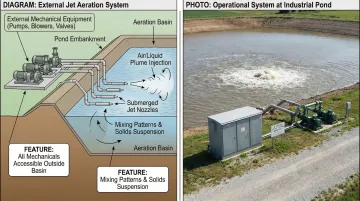
Jet aeration systems use high-velocity liquid jets to draw in and mix air into wastewater, creating intense turbulence and micro-bubbles for oxygen transfer. These systems place all mechanical equipment outside the pond, eliminating the need for in-basin maintenance.
Benefits include:
- All mechanical equipment (pumps and nozzles) placed outside the pond for easy access
- Superior mixing and solids suspension capability
- Energy savings of up to 40% compared to conventional surface aerators
- Effective in deep tanks and high BOD applications
- No icing problems due to elimination of thermal stratification
Jet systems use horizontal plume injection to maintain the gas/liquid transfer interface longer than conventional diffused air systems. Mixing Systems, Inc. supplies jet aeration technology with optional pneumatic backflush systems to eliminate clogging, serving major chemical, pharmaceutical, food processing, and pulp & paper facilities.
Hybrid and Emerging Systems
Facilities often combine multiple aeration types to optimize performance:
- Surface aerators plus diffused aeration for zones requiring different mixing intensities
- Solar-powered aerators for remote lagoon applications
- Variable frequency drives (VFDs) on blowers for automated DO control
Where Aeration Is Used in Wastewater Treatment
Aeration is applied across multiple treatment stages and facility types, serving diverse applications from small municipal systems to large industrial operations.
Treatment Stages
Aeration serves critical functions at three key points in the treatment process:
- Pre-aeration in grit chambers to prevent septicity and keep organics suspended
- Secondary treatment in activated sludge systems and aerated lagoons for primary biological treatment
- Post-aeration after disinfection to restore dissolved oxygen before discharge
Facility Types and Scales
The choice of aeration technology depends heavily on facility size and wastewater characteristics. 94% of lagoon systems in the U.S. serve populations under 3,000 with flows less than 1 million gallons per day. While small municipal systems commonly use floating surface aerators, larger facilities treating high-strength industrial wastewater often benefit from submerged jet aeration systems for superior energy efficiency.
Large industrial facilities treating high-strength wastewater commonly use jet aeration systems for energy efficiency. Industries include:
- Food processing (dairy, meat, ethanol production)
- Pulp and paper mills
- Chemical manufacturing
- Pharmaceutical production
- Petroleum refining
Technology selection depends on specific operational requirements. Large industrial facilities often choose jet aeration for its energy efficiency and ability to handle high-strength wastewater. Deep oxidation ditches typically employ fine-bubble diffused aeration for uniform DO distribution throughout the basin.
Conclusion
Understanding how aeration works—oxygen transfer mechanisms, biological uptake dynamics, and mixing requirements—enables operators and engineers to select systems that balance treatment performance with energy efficiency.
Aeration consumes 50-75% of treatment plant energy costs. Optimizing system selection and operation directly impacts both regulatory compliance and operational budgets through:
- DO monitoring and automated control systems (reducing energy consumption by 10-30%)
- Variable speed drives for demand-responsive operation
- Proper system sizing matched to treatment requirements
Technologies like submerged jet aeration can deliver energy reductions of up to 40% compared to conventional methods while maintaining superior oxygen transfer efficiency—making system selection a critical factor in long-term operational costs.
Frequently Asked Questions
How many hours a day should a pond aerator run?
Most wastewater treatment pond aerators run continuously (24 hours/day) to maintain consistent dissolved oxygen levels and support biological processes. Continuous operation is recommended for reliable treatment performance, though some facultative lagoons use intermittent schedules.
What is the best way to aerate a pond?
The best method depends on pond depth, treatment goals, and budget. Surface aerators work well for shallow ponds (under 3 meters), while jet aeration systems offer superior energy efficiency for deeper industrial applications with high organic loads.
Will aeration remove pond muck?
Aeration doesn't directly remove settled sludge, but it prevents new buildup by keeping biomass suspended and promoting aerobic digestion. Accumulated sludge still requires periodic mechanical removal.
What dissolved oxygen level should wastewater treatment ponds maintain?
Target DO levels vary by treatment type: 1-2 mg/L for facultative lagoons, 2-4 mg/L for fully aerated lagoons and activated sludge systems. Avoid levels below 0.5 mg/L, which cause anaerobic conditions and odors.
How does temperature affect aeration efficiency?
Cold water holds more dissolved oxygen than warm water—oxygen solubility decreases as temperature rises. Aeration systems must work harder in summer to maintain target DO levels. Additionally, biological activity slows below 10°C, requiring longer retention times or higher DO to achieve the same treatment performance.
What are the signs that a pond needs more aeration?
Indicators include persistent odors (hydrogen sulfide smell indicating anaerobic conditions), visible sludge buildup or floating solids, effluent failing to meet BOD/TSS discharge limits, low DO readings (below 1 mg/L in most of the pond), and excessive algae growth indicating nutrients aren't being consumed by bacteria due to oxygen limitation.