What types of industrial applications are jet mixing systems best suited for?
Jet mixing systems excel in large volume tanks (over 1000 gallons) with low viscosity applications (under 100 cP). They're ideal for solids suspension, liquid blending, situations requiring turbulence, rapid homogeneity, and high local shear rates. Industries include chemical processing, pharmaceutical manufacturing, food and beverage production, wastewater treatment, petrochemical refining, pulp and paper, and textile manufacturing.
How do jet aerators achieve superior oxygen transfer compared to other aeration methods?
Our jet aerators utilize multiple oxygen transfer zones: a high contact zone within nozzles creating micro-bubbles (very fine diameter), a high pressure zone at tank bottom with horizontal plume travel, buoyancy bubble rise (1-3 mm diameter), and surface agitation. This multi-zone approach, combined with our double nozzle arrangement and high shear mixing chamber, achieves superior mass transfer rates and significant energy efficiency improvements over conventional diffused air systems.
Can your mixing systems handle solids, and what size particles are acceptable?
Yes, our jet mixing systems can handle solid particles up to approximately 2.2-inch (55 mm) diameter. The largest solid particle must be smaller than the diameter of the primary nozzles to prevent plugging. The systems are designed for effective solids suspension and can maintain particles in suspension through the high-velocity jets and circulation patterns created.
What materials and configurations are available for specialized applications?
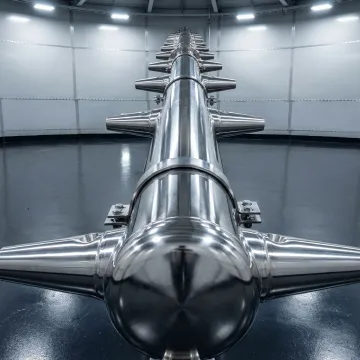
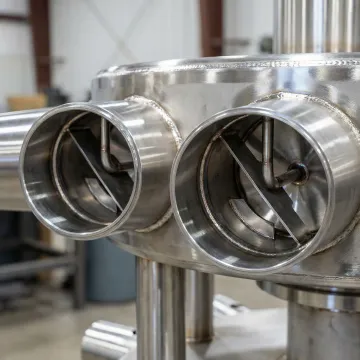
We offer systems in various materials including stainless steel configurations for pharmaceutical, food processing, and corrosive environments. Available configurations include Directional Jet Mixers (DJM), Bidirectional Jet Mixers (BJM), Eddy Jet Mixers (EJM), and various aerator configurations (DMJA, BMJA, EMJA). We also provide mini jet mixers for smaller applications and self-contained units for specialized installations.
How difficult is installation and what are the maintenance requirements?
Our systems are easier and less expensive to install than comparable diffused aeration systems. They feature prefabricated sections for easy assembly, and all mechanical assemblies are placed outside tanks for convenient service access. The systems require virtually no maintenance due to the absence of in-basin moving parts. Optional pneumatic backflush systems eliminate clogging concerns, ensuring continuous operation.
What size tanks can your systems accommodate?
Our systems are especially cost-effective in large volume tanks over 1000 gallons. Eddy Mix Jet Aerators are suited for circular tanks up to 65 feet (20 meters) in diameter. For larger installations, multiple aerators or mixers can be used with common headers. Systems can be installed in square, circular, or rectangular tank configurations without affecting performance, and we design for deep tank operations.
Do your systems eliminate common aeration problems like misting and icing?
Yes, because all aeration and mixing occurs below the surface, our systems eliminate mist or spray problems entirely. They also prevent icing issues through elimination of thermal stratification. This submerged operation provides cleaner, safer working conditions while maintaining superior performance in all weather conditions.
What is the typical lead time for a custom-engineered system?
Lead times vary based on system complexity, materials specified, and current production schedule. After initial consultation and specification review, our engineering team provides detailed timelines for design, manufacturing, and delivery. We utilize computer-aided design to expedite the engineering phase while ensuring precision. Contact us for specific project timelines and to discuss your application requirements.