Introduction
Activated sludge is a biological wastewater treatment process that uses aerobic microorganisms and continuous aeration to break down organic pollutants. Many facilities struggle with maintaining consistent treatment performance while managing rising energy costs—aeration alone typically consumes 50-70% of a plant's total electrical energy [3].
Understanding this process is critical for maintaining regulatory compliance, optimizing efficiency, and controlling operating costs.
This guide walks through how the activated sludge process works step-by-step, what equipment is involved, key performance factors, and when this method works best—including the fundamentals of biological oxidation, process control parameters, and practical operational considerations.
Key Takeaways
- Aerobic bacteria consume organic matter in aeration tanks, converting it into settleable biological floc
- Requires continuous aeration with secondary clarifier and sludge recycling to maintain microbial populations
- Maintaining DO (2.0-3.0 mg/L), MLSS (2,000-4,000 mg/L), and F/M ratio (0.2-0.5) ensures optimal treatment performance
- Achieves 85-95% BOD removal with skilled operation and proper maintenance
- Advanced aeration systems reduce operating costs by up to 40% compared to conventional diffused air methods
What Is the Activated Sludge Process?
Activated sludge is a suspended-growth biological treatment process where wastewater and a concentrated mass of microorganisms are mixed and aerated to decompose organic pollutants.
The term "activated" refers to the highly concentrated, aerobic microbial population that actively consumes organic matter—not a chemical activation step.
The primary outcome is converting dissolved and colloidal organic pollutants into settleable biological floc that can be separated from treated water through gravity settling. This transformation allows facilities to achieve 85-95% BOD removal and meet stringent discharge standards.
How It Compares to Other Treatment Methods
Activated sludge operates differently from alternative biological treatment approaches:
- Attached-growth processes: Microorganisms grow on fixed media (trickling filters) rather than suspended in liquid
- Lagoon systems: Treatment occurs in large basins with retention times of weeks rather than hours
- Membrane bioreactors: Combine activated sludge with membrane filtration instead of gravity clarification
Activated sludge is a secondary treatment process that typically follows primary treatment (screening and sedimentation) and precedes disinfection. This position in the treatment train allows it to target dissolved organic compounds that physical settling cannot remove.
Why Activated Sludge Is Used in Wastewater Treatment
Activated sludge has become the industry standard for medium-to-large municipal facilities. In the US, 70% of large municipal plants by flow volume use activated sludge as their secondary treatment technology.
Globally, wastewater treatment plants serve approximately 34.7% of the world's population, with activated sludge dominating this infrastructure [2].
Key reasons facilities choose activated sludge:
- Regulatory compliance: Achieves 85-95% BOD removal and consistently produces effluent with <10 mg/L BOD and <10 mg/L TSS, meeting EPA secondary standards (30-day averages of 30 mg/L for BOD5 and TSS) [14] [13]
- Predictable performance: Provides consistent treatment despite fluctuations in influent characteristics—critical for municipal and industrial facilities with variable loads
- Nutrient removal capability: Advanced configurations can achieve Total Nitrogen <3-8 mg/L and Total Phosphorus <0.5-1 mg/L when required by stringent permits
- Established technology: Decades of operational experience and proven reliability across diverse applications
Environmental Consequences Without Proper Treatment
Without effective secondary treatment, inadequate BOD and TSS removal leads to permit violations and environmental damage. Organic matter discharged to receiving waters consumes dissolved oxygen, causing hypoxia and fish kills.
Excess nitrogen and phosphorus trigger algal blooms that further deplete oxygen and degrade aquatic ecosystems through eutrophication. These environmental consequences, combined with potential public health risks, make activated sludge or equivalent biological treatment essential for facilities above certain flow thresholds or in environmentally sensitive areas.
How the Activated Sludge Process Works (Conceptual Flow)
The activated sludge process follows a continuous cycle:
- Primary-treated wastewater (containing dissolved and suspended organic matter), return activated sludge (RAS) with concentrated microorganisms, and air or pure oxygen enter the aeration tank
- Aerobic bacteria consume organic compounds as food and energy, producing new bacterial cells, carbon dioxide, water, and stabilized waste products. Protozoa graze on bacteria to maintain a healthy microbial balance
- Mixed liquor flows to a clarifier where biological floc settles by gravity
- Clear effluent is discharged or sent for further treatment, while settled sludge is either returned (RAS) or wasted (WAS)
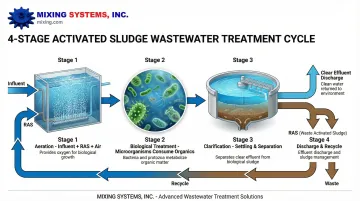
Maintaining this continuous cycle requires careful process control.
Process control mechanisms:
- Aeration rates adjusted to keep dissolved oxygen at 2.0-3.0 mg/L
- RAS and WAS rates managed to control MLSS concentration and sludge age
- F/M ratio monitored to balance food supply with microbial population
When operators maintain these parameters correctly, the system delivers consistent results.
Results of proper operation:
- The process reduces organic pollutants (measured as BOD/COD) by 85-95%
- Suspended solids converted to settleable biological floc
- Nutrients reduced through nitrification/denitrification modifications when set up properly
- Consistent effluent quality that meets discharge permits
The process depends on maintaining the right balance between incoming organic load, microbial population size, oxygen supply, and solids retention time. When these factors align properly, the system operates stably with minimal operator intervention.
Step 1: Aeration and Biological Oxidation
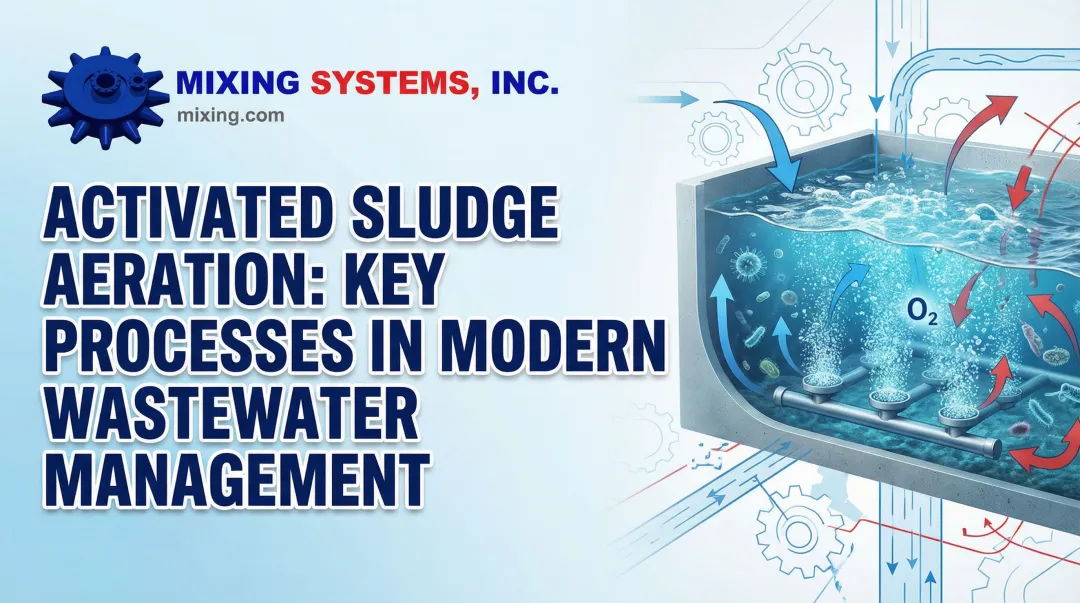
In the aeration tank, diffused air or mechanical aerators supply oxygen while mixing incoming wastewater with return activated sludge to create "mixed liquor."
Aerobic bacteria rapidly consume dissolved organic matter through metabolic oxidation, breaking down complex molecules into simpler compounds and incorporating some material into new cell mass.
Hydraulic retention times vary by system design:
- Conventional activated sludge: 4-8 hours
- Extended aeration: 18-24 hours
- High-rate systems: 0.5-2 hours
Longer retention times provide more contact time between microorganisms and organic matter, typically resulting in more complete treatment but requiring larger tank volumes.
These retention times work hand-in-hand with oxygen availability to drive treatment efficiency.
Dissolved oxygen management is critical:
Maintaining DO levels of 2.0-3.0 mg/L at the aeration tank discharge supports aerobic metabolism and prevents the growth of filamentous bacteria that cause settling problems.
For facilities with nitrification requirements, DO must be maintained at 3.0-5.0 mg/L to ensure efficient conversion of ammonia to nitrate; nitrification ceases below 0.5 mg/L.
Energy Efficiency in Aeration
Aeration equipment represents the largest energy consumer in the process, accounting for 50-70% of total plant energy consumption.
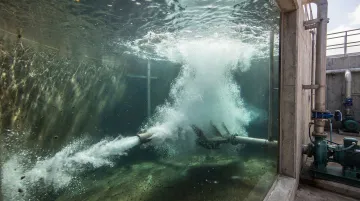
Submerged jet aeration systems address this challenge by reducing energy consumption by up to 40% compared to conventional diffused air methods while providing superior oxygen transfer efficiency. These systems create micro-size bubbles (very fine diameter) through high-velocity jet action, maintaining the gas-liquid transfer interface longer than conventional methods and maximizing oxygen dissolution.
Step 2: Secondary Clarification and Solids Separation
Mixed liquor flows from the aeration tank to a secondary clarifier (final settling tank) where calm conditions allow biological floc to settle by gravity.
Well-formed floc settles to the bottom, forming a "sludge blanket," while clear, treated water rises and flows over weirs for discharge or further treatment.
Sludge settling characteristics are measured by Sludge Volume Index (SVI):
- Good settling: 50-150 mL/g indicates healthy, compact floc
- Bulking concern: >150 mL/g indicates poor settling and potential operational problems
Clarifier Design Parameters
Achieving consistent settling requires balancing these design parameters with your actual operating conditions.
Clarifier design must balance two critical loading rates:
- Hydraulic loading (surface overflow rate): Typically 400-600 gpd/sq ft for increased process stability
- Solids loading rate: Must prevent sludge blanket washout during peak flow conditions
Proper clarifier operation is essential because any solids escaping in the effluent directly impact final effluent quality and permit compliance. A well-operated clarifier produces crystal-clear effluent with TSS concentrations below 10 mg/L.
A failing clarifier can cause immediate permit violations regardless of how well the biological process is performing.
Step 3: Sludge Recycling and Wasting
Settled sludge from the clarifier bottom splits into two streams that control the entire biological process:
Return Activated Sludge (RAS):
The system pumps RAS back to the aeration tank inlet to maintain proper microorganism concentration, typically 2,000-4,000 mg/L MLSS. This recycling ensures sufficient biomass matches the incoming organic load.
RAS rates typically range from 50-100% of influent flow, adjusted based on settling characteristics and desired MLSS concentration.
Waste Activated Sludge (WAS):
WAS removal controls sludge age (Mean Cell Residence Time or Solids Retention Time), which determines which microbial populations can survive in the system:
- BOD removal only: 3-5 days
- Nitrification: >8 days, typically 10-15 days for stability
- Extended aeration: 20-30+ days
The balance between RAS and WAS rates determines the F/M ratio (food-to-microorganism ratio). Typical values range from 0.2-0.5 lb BOD/day per lb MLVSS for conventional activated sludge.
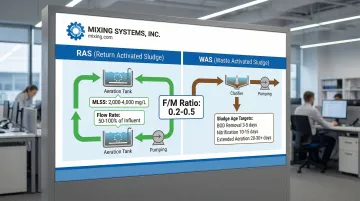
This ratio fundamentally affects treatment performance, sludge production, and settling characteristics.
Critical Warning:
Failure to waste sludge properly leads to excessive MLSS, poor settling, rising sludge in the clarifier, and deteriorating effluent quality.
Conversely, excessive wasting depletes the microbial population. This reduces treatment capacity and can cause permit violations during high-load periods.
Where the Activated Sludge Process Is Applied
Facility Types and Scale
Facility types using activated sludge:
- Municipal WWTPs: Serving communities from 10,000 to millions of people
- Industrial facilities: Food processing, chemical manufacturing, pharmaceutical, pulp and paper
- Package plants: Small communities or commercial developments requiring compact, pre-engineered systems
Treatment Train Position
Position in the treatment train:
Activated sludge always follows preliminary treatment (screening, grit removal) and usually follows primary clarification. However, extended aeration and high-rate systems can treat raw wastewater directly, eliminating the need for primary settling.
Once the treatment sequence is established, facilities select from several proven system configurations.
Common operational configurations:
- Continuous-flow conventional systems: Standard design with separate aeration and clarification
- aeration configurations: Combine aeration and settling in one tank operated in timed cycles; typically used for flows ≤5 MGD
- Oxidation ditches: Long, looped channels with horizontal flow patterns
- Membrane bioreactors (MBR): Replace clarifiers with filtration membranes for superior effluent quality
Operational Patterns
Most municipal applications operate continuously 24/7. Operators make adjustments in response to diurnal flow and load variations, seasonal temperature changes, and periodic industrial discharge events.
Operators monitor key parameters multiple times per shift and adjust aeration rates, RAS/WAS pumping, and chemical addition to maintain stable performance.
Key Factors That Affect the Activated Sludge Process in Wastewater Treatment
Process Control Parameters
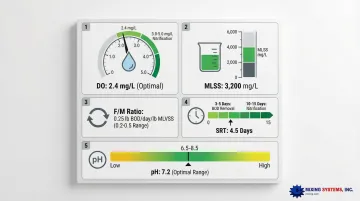
Dissolved Oxygen (DO):
- Impacts microbial activity and settling characteristics
- Standard range: 2.0-3.0 mg/L
- Nitrification requires: 3.0-5.0 mg/L
MLSS/MLVSS Concentration:
- Controls treatment capacity and clarifier loading
- Typical range: 2,000-4,000 mg/L
- MLVSS (volatile fraction) represents active biomass
F/M Ratio:
- Balances food supply with microbial population
- Conventional: 0.2-0.5 lb BOD/day/lb MLVSS
- Affects sludge production and settling
Sludge Age (SRT):
- Determines which microbial populations survive
- BOD removal: 3-5 days
- Nitrification: 10-15 days
pH and Alkalinity:
- Optimal pH: 6.5-8.5 for general activity
- Nitrification optimal: 8.0-8.5
- Nitrification consumes 7.1 mg alkalinity per mg ammonia oxidized
Temperature:
- Biological activity drops ~50% for every 10°C decrease
- Nitrification rate doubles for every 8-10°C increase
- Winter operations require higher MLSS/SRT to compensate
Equipment Dependencies
These control parameters depend on properly sized and maintained equipment to function effectively.
Aeration system capacity and efficiency:
- Determines maximum organic loading the system can handle
- Fine-pore diffusers deliver 2.5-3.5 kg O2/kWh under field conditions
- Mechanical surface aerators deliver only 0.7-1.4 kg O2/kWh
Switching from mechanical to fine-pore systems can save 20-75% of aeration energy. Submerged jet aeration systems offer an alternative approach, combining oxygen transfer with mixing in a single unit that eliminates in-basin moving parts.
Clarifier surface area and depth:
- Limits hydraulic and solids loading rates
- Surface overflow rate: 400-600 gpd/sq ft recommended
- Undersized clarifiers cause immediate permit violations
RAS and WAS pumping reliability:
- Pump failures disrupt the entire biological process
- Variable frequency drives allow precise flow control
- Backup pumps are essential for operation
Mixing equipment:
- Ensures uniform conditions throughout the aeration tank
- Prevents solids settling and dead zones
- Critical for maintaining consistent DO and MLSS distribution
Operational Constraints
Influent characteristics:
- Toxic industrial discharges can kill biomass within hours
- Shock loads (sudden flow or concentration spikes) destabilize the process
- Low BOD concentrations make maintaining adequate F/M ratio difficult
Regulatory limits:
- Stricter limits require longer SRT, higher DO, and larger tanks
- Nutrient limits (nitrogen, phosphorus) necessitate advanced configurations
- Seasonal limits may require operational mode changes
Energy costs:
- Aeration represents 50-70% of total plant energy
- Small plants (<1 MGD) average 5,931 kWh/MG
- Larger facilities achieve 1,203-2,236 kWh/MG through economies of scale
Skilled operator availability:
- Process requires continuous monitoring and adjustment
- Operators must interpret data and respond to changing conditions
- Most jurisdictions require certified operators by regulation
Biosolids disposal:
- Approximately 0.5 lbs of solids produced per lb BOD removed
- Disposal costs often represent 30-50% of total O&M
- EPA 40 CFR Part 503 governs land application requirements
Common Issues and Misconceptions
"More Air Is Always Better"
Many operators believe increasing aeration always improves performance, but excessive aeration causes multiple problems:
- Wastes energy when aeration exceeds DO requirements with no additional benefit
- Creates pin floc through high turbulence that shears biological floc, producing small particles that settle poorly and increase effluent turbidity
- Strips alkalinity by removing CO2, raising pH and potentially hindering settling—one study showed controlling aeration improved SVI by 26%
- Maintain DO within the target range (2.0-3.0 mg/L for BOD removal, 3.0-5.0 mg/L for nitrification) rather than maximizing aeration
MLSS vs. MLVSS Confusion
Operators sometimes confuse these two measurements:
- MLSS (Mixed Liquor Suspended Solids): Total suspended solids including active biomass and inert material
- MLVSS (Mixed Liquor Volatile Suspended Solids): Only the volatile (organic) fraction representing active biomass
MLVSS provides a more accurate measure of biological treatment capacity because it excludes inert solids that contribute to clarifier loading without providing treatment.
Key characteristics of the MLVSS/MLSS ratio:
- Normal range: 0.65-0.85
- Lower ratios indicate excessive inert accumulation
- Higher ratios suggest healthier, more active biomass
Sludge Bulking Root Causes
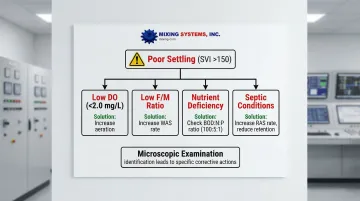
Understanding what drives poor settling helps operators fix the problem at its source. Operators often blame bulking (poor settling due to filamentous bacteria growth) on "bad bugs," but the real causes are typically operational:
Common root causes:
- Filamentous bacteria tolerate low dissolved oxygen better than floc-formers; maintaining >2.0 mg/L prevents most bulking
- Low F/M ratio (old sludge) promotes slow-growing filaments; adjusting WAS rates can correct this
- Lack of nitrogen or phosphorus (ideal ratio is 100:5:1 for BOD:N:P) causes slime bulking [6]
- Sulfide generation in the clarifier promotes sulfur-oxidizing filaments under septic conditions
Diagnostic approach:
Microscopic examination using phase-contrast microscopy and Gram/Neisser staining identifies specific filament types.
Different filaments indicate different root causes—for example, Sphaerotilus natans indicates low DO, while Microthrix parvicella indicates low F/M ratio and cold temperatures. Fixing bulking requires identifying and correcting the underlying operational problem, not just treating symptoms.
When the Activated Sludge Process May Not Be Appropriate
Very Small Flows
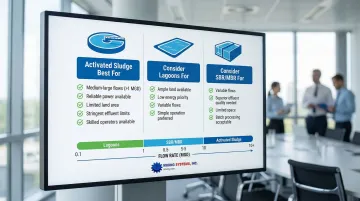
For flows below 1 MGD, activated sludge faces significant challenges:
- Energy intensity: Small plants average 5,931 kWh/MG—more than double larger facilities
- Operational complexity: Small communities often lack certified operators required for activated sludge
- Better alternatives: Package plants, lagoons, or constructed wetlands provide simpler, lower-cost options
- Economic threshold: Activated sludge becomes cost-effective around 0.1-0.5 MGD depending on local conditions
Unreliable Electrical Power
Activated sludge requires continuous aeration and pumping. Where power interruptions are common, passive treatment options offer greater reliability:
- Facultative lagoons requiring only occasional mixing
- Constructed wetlands with no mechanical equipment
- Trickling filters with gravity flow and minimal power requirements
Ample Land Availability
When land is inexpensive and available, passive systems offer significant advantages:
- Lagoons: Provide equivalent treatment at lower O&M cost (primarily land and occasional maintenance)
- Constructed wetlands: Minimal operating costs after establishment
- Lifecycle cost advantage: Passive systems eliminate 50-majority of energy costs associated with aeration
Highly Variable or Seasonal Flows
Continuous-flow activated sludge struggles with extreme flow variations:
- Maintaining stable MLSS and F/M ratio becomes difficult when flow varies by 10:1 or more
- aeration configurations handle variable flows well through timed cycles, while lagoons provide massive equalization capacity
- Schools, resorts, and seasonal communities may benefit from systems that can be shut down during off-season
Extreme Cold Climates
Biological activity drops dramatically in cold temperatures. Nitrification is severely slowed below 10°C (50°F), requiring either massive tank volumes (long SRT) or expensive tank heating to compensate.
Fixed-film processes retain biomass better in cold conditions. For jet aeration systems like those from Mixing Systems, Inc., deep tank operation and thorough mixing help maintain more consistent temperatures, though extreme cold still impacts biological performance.
These technical limitations often reveal themselves through operational symptoms.
Warning Signs of Inappropriate Application
Consider whether activated sludge is the wrong choice if you observe:
- Chronic inability to maintain target MLSS or DO levels despite properly functioning equipment
- Excessive operator intervention required daily to maintain stability
- Energy costs consistently exceeding budget projections by >20%
- Permit violations occurring regularly despite proper operating procedures
Conclusion
The activated sludge process remains the proven standard for biological wastewater treatment, using continuous aeration and recycled microorganisms to achieve 85-95% removal of organic matter and nutrients. Its dominance in the industry—serving 70% of large US municipal plants by flow volume—reflects decades of reliable performance and technological refinement.
Successful operation depends on understanding the biological fundamentals and maintaining proper control parameters:
- Dissolved oxygen: 2.0-3.0 mg/L (or 3.0-5.0 mg/L for nitrification)
- MLSS concentration: 2,000-4,000 mg/L
- F/M ratio: 0.2-0.5
- Appropriate sludge age for your treatment objectives Equally important is selecting energy-efficient equipment and having skilled operators who can interpret process data and respond to changing conditions.
Although activated sludge requires higher capital and energy costs than passive systems, advances in aeration technology are making the process more economical. Modern jet aeration systems—like those engineered by manufacturers serving the chemical, pharmaceutical, food processing, and municipal sectors—can reduce energy consumption by up to 40% compared to conventional methods while maintaining superior oxygen transfer efficiency. For facilities with stringent discharge requirements, reliable power supply, and adequate operational resources, activated sludge continues to deliver consistent, predictable treatment performance that meets regulatory standards and protects receiving waters.
Frequently Asked Questions
What is an activated sludge wastewater treatment plant?
An activated sludge plant uses aerobic microorganisms to treat wastewater. It consists of an aeration tank where bacteria and wastewater are mixed with air, followed by a clarifier where solids settle out.
What are the 4 stages of sewage treatment plant?
The four stages are preliminary treatment (screening and grit removal), primary treatment (sedimentation), secondary treatment (biological processes like activated sludge), and tertiary treatment (polishing, nutrient removal, or disinfection).
What is the difference between MBBR and CAS?
MBBR uses bacteria growing on plastic media carriers, while CAS uses bacteria floating freely in mixed liquor. MBBR requires less space and handles shock loads better, while CAS offers greater operational flexibility.
Do organic farms use sewage sludge as fertilizer?
The USDA National Organic Program explicitly prohibits sewage sludge use in organic production. While treated biosolids can be used as fertilizer in conventional agriculture, organic farms must use plant-based compost instead.
How much does it cost to operate an activated sludge system?
Operating costs vary widely based on plant size and design, typically ranging from $200-800 per million gallons treated. Energy for aeration represents 50-70% of total operating costs. Small plants (<1 MGD) face higher costs (~$1,200-1,500 per MG) due to lack of economies of scale.
What causes sludge bulking and how is it prevented?
Bulking occurs when filamentous bacteria outcompete floc-forming bacteria due to low dissolved oxygen, low F/M ratio, nutrient deficiency, or septic conditions. Prevention requires maintaining proper DO levels (>2.0 mg/L), appropriate sludge age, and balanced nutrient ratios.