Introduction: The Evolution of Sludge Digestion Technology
Wastewater treatment facilities now operate under a perfect storm of challenges: aging infrastructure built decades ago, energy costs that can consume 30-40% of operating budgets, and EPA mandates demanding higher treatment standards. Many operators struggle to maximize biogas production and biosolids quality while staying within budget constraints.
These pressures are driving unprecedented innovation in sludge digestion technology.
Between 2023 and 2025, breakthrough technologies are transforming how facilities handle organic waste. Climate goals, energy independence targets, and the push for resource recovery from waste streams are accelerating adoption of advanced digestion systems.
The global market for anaerobic digestion units reached $10.35 billion in 2025, with a projected annual growth rate of 12.26% through 2033.
This article explores the most impactful innovations reshaping sludge digestion—from thermal hydrolysis and AI-driven optimization to next-generation mixing systems and IoT monitoring. You'll discover which technologies deliver measurable ROI, how facilities are achieving energy neutrality, and what practical steps can upgrade existing digesters without complete replacement.
TLDR:
- Thermal Hydrolysis Process increases biogas yields by 30-50% while reducing digester volume requirements by 40-60%
- AI and machine learning cut aeration energy by 23% and chemical use by 18% through real-time optimization
- Advanced mixing technologies reduce energy consumption by up to 40% compared to conventional methods
- Co-digestion with food waste and FOG boosts methane production by 50-185%
- IoT remote monitoring systems deliver ROI in under 3 years with rapid response capabilities
Advanced Anaerobic Digestion Technologies Reshaping the Industry
Thermal Hydrolysis Process (THP) and Its Commercial Expansion
Thermal Hydrolysis Process has emerged as the leading pretreatment technology for maximizing digester performance.
THP heats sludge to 160-180°C at approximately 6 bar pressure for 20-30 minutes, breaking down complex organic structures and destroying pathogens to achieve Class A biosolids standards.
Performance improvements are substantial:
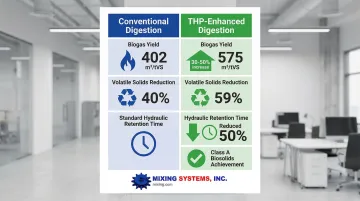
- Biogas yield increases: 30-50% improvement over conventional digestion, with pilot studies reporting yields of 575 m³/tVS compared to 402 m³/tVS
- Volatile solids reduction: Improves from 40% to 59% in typical applications
- Hydraulic retention time: Reduced by 50%, effectively doubling existing digester capacity
- Capital efficiency: DC Water saved approximately $200 million by halving required digester volume at their Blue Plains facility
By 2024, Cambi had systems ordered for 90 plants across 27 countries, serving a population equivalent of 120 million. Recent upgrades include Dallas TRA CRWS (2023) and new contracts in Palma de Mallorca (delivery 2026).
Plants can choose from several THP configurations based on their specific needs:
- Pre-digestion THP: Most common configuration, maximizes biogas production and digester capacity
- Post-digestion THP: Focuses on biosolids stabilization and pathogen reduction
- Intermediate THP: Balances benefits between two-stage digestion systems
The technology enables complete sterilization, meeting EPA Class A biosolids requirements and expanding land application options.
While energy-intensive, THP combined with proper heat recovery achieves net positive energy balance of +4.1 kWh per kg volatile solids removed.
Temperature-Phased Anaerobic Digestion (TPAD) Advancements
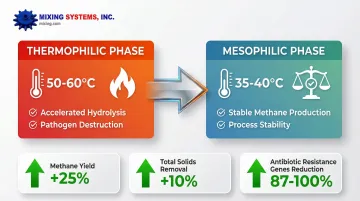
Beyond thermal pretreatment, TPAD optimizes digestion by separating thermophilic (50-60°C) and mesophilic (35-40°C) stages.
The thermophilic phase accelerates hydrolysis and pathogen destruction, while the mesophilic phase provides stable methane production.
Performance metrics demonstrate clear advantages:
- Methane yield increased by 25% in high-solid sludge applications compared to single-stage mesophilic digestion
- Total solids removal improved by 10%
- In co-digestion scenarios, TPAD boosted methane yield by 50.3% over mesophilic-only systems
- Full-scale TPAD systems achieved 87-100% reduction in antibiotic resistance genes
The most effective configuration employs a thermophilic first stage at 55°C followed by mesophilic second stage at 37°C.
This arrangement provides pathogen kill in the first stage while maintaining process stability and maximizing methane production in the second stage.
TPAD is particularly effective for facilities processing high-strength wastes or implementing co-digestion programs.
The technology's resilience to variable feedstock conditions makes it ideal for plants accepting food waste or industrial organic streams alongside municipal sludge.
Acid/Gas-Phased Digestion Systems
Separating acidogenesis and methanogenesis into distinct reactors creates optimized conditions for each microbial community. This phase separation improves both process stability and conversion efficiency.
Key performance advantages:
- 40% higher ultimate methane yield (240 mL/g COD) when integrated with thermal hydrolysis
- Biogas production rates of 1,507 mL/L/d in co-digestion applications, compared to 230 mL/L/d for single-stage systems
- Greater resilience to organic overloading and pH fluctuations
The two-phase approach allows for tailored conditions in each reactor. The acidogenic phase operates with short hydraulic retention time (1-3 days) at lower pH, optimizing hydrolysis and acid formation.
The methanogenic phase requires longer retention (14-40 days) at neutral pH, providing stable conditions for methane-producing microorganisms.
This configuration is particularly valuable for facilities with variable feedstock quality or those implementing aggressive co-digestion programs. The separated phases buffer against process upsets that would destabilize conventional single-stage digesters.
Artificial Intelligence and Machine Learning Revolutionizing Operations
Predictive Maintenance and Equipment Failure Prevention
AI algorithms analyze sensor data from digesters, pumps, mixers, and blowers to predict equipment failures before they occur. The result: reduced costly unplanned downtime and extended equipment lifespan.
Documented benefits include:
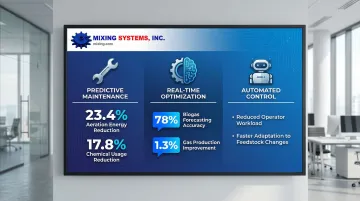
- 23.4% reduction in aeration energy consumption through AI-driven control optimization
- 17.8% reduction in chemical usage by predicting optimal dosing rates
- Detection of precursors to foaming and digester over-pressure conditions
Machine learning models identify subtle patterns in vibration data, temperature fluctuations, and performance metrics that indicate impending failures.
Operators receive alerts days or weeks before critical equipment fails, allowing scheduled maintenance during planned downtime rather than emergency repairs.
Real-Time Process Optimization
Machine learning continuously analyzes temperature, pH, volatile fatty acids, and organic loading to automatically adjust feeding rates and mixing intensity. Dynamic optimization maintains ideal conditions as feedstock characteristics change.
Performance improvements:
- 78% accuracy in forecasting biogas production, enabling proactive energy management
- 1.3% improvement in gas production through neural network optimization of loading rates
- Reduced operator workload by automating routine adjustments
Co-digestion programs benefit especially from real-time optimization. Feedstock variability can destabilize conventional control strategies, but AI systems adapt faster than manual intervention, maintaining stable gas production.
Digital Twin Technology for Digester Management
Digital twins create virtual replicas of digesters to simulate different scenarios, test process changes, and train operators without risking actual operations. The technology enables risk-free experimentation and optimization.
Anessa has developed an AI-driven suite specifically for creating digital twins of biogas plants. A pilot facility in France is currently integrating this technology to develop site-specific AI models for operational optimization.
Digital twin capabilities:
- Simulate impact of feedstock changes before implementation
- Test control strategies and operational modifications virtually
- Train operators on upset recovery without process risk
- Optimize maintenance schedules based on predicted performance
Mid-scale WWTPs have implemented digital twins using platforms like WEST to optimize aeration and chemical dosing, demonstrating the technology's real-world use beyond large facilities.
Data Analytics for Performance Benchmarking
Advanced analytics platforms aggregate data from multiple digesters to identify best practices and performance gaps. Cross-facility comparison enables continuous improvement by highlighting operational differences that impact outcomes.
Benchmarking benefits:
- Identify top-performing facilities and adopt their operational strategies
- Quantify impact of specific operational changes on biogas yield
- Establish realistic performance targets based on actual facility data
- Prioritize improvement projects by potential impact
China's 14th Five-Year Plan mandates carbon audits and performance benchmarking, aiming to establish 100 benchmark WWTPs with high-efficiency resource recycling by 2025. This regulatory push is accelerating adoption of data analytics platforms globally.
Energy Efficiency and Process Optimization Breakthroughs
Advanced Mixing Technologies for Enhanced Digester Performance
Modern mixing systems cut energy consumption by up to 40% while boosting biogas yields. These innovations eliminate dead zones and maintain uniform temperatures throughout digesters.
Recent comparative analyses of full-scale digesters reveal significant performance differences across mixing technologies:
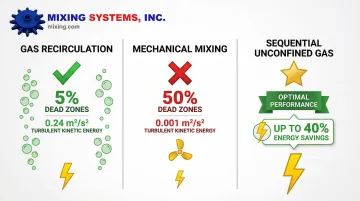
- Gas recirculation systems: 5% dead zones, 0.24 m²/s² turbulent kinetic energy
- Mechanical mixing systems: 50% dead zones, 0.001 m²/s² turbulent kinetic energy
- Sequential unconfined gas mixing: Most efficient method at equal net power inputs
Jet mixing systems improve solids suspension and enhance gas-liquid-solid contact for better biogas production. Energy consumption drops by up to 40% compared to conventional mechanical mixers while methane yields increase.
Companies like Mixing Systems, Inc. design jet mixing equipment specifically for digester applications, placing all mechanical assemblies outside tanks for easier maintenance.
Key advantages of advanced mixing:
- All mechanical assemblies placed outside tanks for easy service access
- No in-basin moving parts to maintain or replace
- Flexible operation with variable flow control
- Deep tank operation capability without performance degradation
- Virtually maintenance-free operation
For facilities considering digester upgrades, mixing system improvements often deliver the fastest payback.
Optimized mixing enhances existing digester performance without requiring major structural modifications or process changes.
Co-Digestion Strategies and Feedstock Optimization
Co-digestion uses spare digester capacity to process high-strength organic wastes, generating additional revenue while boosting energy production. Facilities increasingly accept food waste, fats-oils-greases (FOG), and agricultural residues.
Biogas yield improvements:
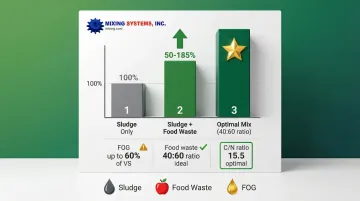
- Co-digesting sludge with food waste and FOG increases methane yields by 50-185%
- Adding FOG up to 60% of volatile solids enhances biogas production by 55-60%
- Optimal food waste ratio of 40% sludge to 60% food waste (C/N ratio of 15.5) maximizes yield in TPAD systems
Operational considerations:
- FOG concentrations exceeding 60% of volatile solids can inhibit methanogenic activity
- Optimal mixture ratios vary by feedstock characteristics and digester configuration
- Careful monitoring of volatile fatty acids prevents process upset from overloading
These operational limits matter in practice. The Moosburg WWTP in Germany achieved energy neutrality by co-digesting sewage sludge with food and dairy waste at a ratio of 35:47:18, increasing methane potential by 300%. This demonstrates the transformative impact of well-designed co-digestion programs.
Similar growth is occurring across North America. Biogas production from U.S. facilities processing food waste reached 19,711 SCFM in 2023, reflecting steady growth in co-digestion capacity. Municipal facilities increasingly view organic waste acceptance as both a revenue opportunity and energy solution.
Heat Recovery and Energy Integration Systems
Capturing and utilizing waste heat from digesters and biogas engines reduces external energy requirements. Integrated heat recovery is essential for facilities pursuing energy neutrality.
Energy neutrality success stories:
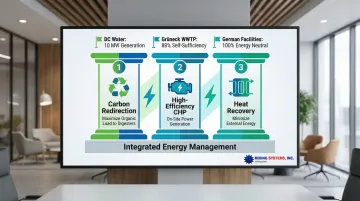
- DC Water's Blue Plains facility generates 10 MW of electricity, meeting one-third of total energy needs and saving $10 million annually
- Grüneck WWTP increased energy self-sufficiency from 64% to 88% through aeration upgrades and food waste co-digestion
- German facilities achieve full energy neutrality by combining advanced digestion with high-efficiency CHP units
Heat recovery strategies:
- Capture waste heat from biogas engine jackets and exhaust
- Utilize recovered heat for digester temperature maintenance
- Preheat incoming sludge to reduce digester heating loads
- Integrate heat exchangers into thermal hydrolysis systems
Successful energy-neutral facilities share three strategies:
- Carbon redirection to maximize organic load to digesters
- High-efficiency combined heat and power units for on-site generation
- Comprehensive heat recovery to minimize external energy purchases
Biogas Upgrading and Biomethane Production
Emerging technologies remove CO2, H2S, and other impurities to produce pipeline-quality biomethane or vehicle fuel. The renewable natural gas (RNG) market is expanding rapidly as facilities seek higher-value uses for biogas.
Market growth:
- RNG production from waste sources in the U.S. is estimated at 120-140 tBtu annually
- Growth rate of 25-35% annually since 2013
- France focuses 90% of new biogas projects on biomethane injection rather than electricity generation
Upgrading technologies:
- Membrane separation: Dominant technology in markets like France (84% of upgrading plants)
- Pressure swing adsorption: Used in approximately 9% of French installations
- H2S removal: Iron-based sorbents (guard beds) protect downstream equipment from corrosion
Biogas upgrading enables facilities to inject biomethane into natural gas pipelines or produce compressed natural gas (CNG) for vehicle fuel. These higher-value applications improve project economics compared to on-site electricity generation alone.
Emerging Materials and Next-Generation Reactor Designs
Novel Membrane Technologies for Enhanced Separation
Advanced membrane materials improve solid-liquid separation and enable better nutrient recovery from digestate. Anaerobic dynamic membrane bioreactors (AnDMBR) are emerging as a solution for high-solids digestion.
These systems show measurable performance gains. Recent studies demonstrate AnDMBR systems achieving methane yields of 330-350 mL/g COD in co-digestion applications, significantly outperforming conventional CSTRs which yielded 96-326 mL/g COD under similar conditions.
Membrane technology advantages:
- Higher organic loading rates in smaller footprints
- Better effluent quality for downstream processing
- Enhanced nutrient recovery from digestate
- Reduced sludge production
Membrane bioreactors specifically designed for anaerobic applications are overcoming traditional challenges like fouling and high maintenance requirements. New membrane materials with improved chemical resistance and self-cleaning properties are extending operational lifespans.
High-Rate Anaerobic Digester Configurations
Beyond membrane separation, reactor design innovations are transforming treatment capacity. Expanded Granular Sludge Bed (EGSB) and Internal Circulation (IC) reactors achieve shorter retention times through high-rate microbial activity. These configurations reduce required digester volume while maintaining or improving performance.
High-rate system benefits:
- Smaller footprint for equivalent treatment capacity
- Faster startup and recovery from upsets
- Higher organic loading rates
- Reduced capital costs for new installations
Pilot studies treating industrial wastewater demonstrated stable EGSB operation at mesophilic temperatures with optimized hydraulic retention times. Chronic toxicity remains a challenge requiring periodic re-inoculation for some industrial applications.
Despite this limitation, high-rate systems are particularly attractive for facilities with space constraints or those treating high-strength industrial wastes. The reduced footprint enables capacity expansion within existing plant boundaries.
Biofilm-Based Digestion Systems
Fixed-film and moving bed biofilm reactors take a different approach. They provide stable microbial communities and improved process stability. Biofilm systems maintain active biomass even during periods of low organic loading or process upset.
Performance enhancements:
- Optimized sludge-derived biochar (15 g/L) increased biogas yield by 48% in lab-scale trials
- Methane content improved by 9.6% through biofilm development
- Reduced ammonia inhibition in high-nitrogen wastes
Conductive materials and biochar provide surfaces for biofilm development while facilitating direct interspecies electron transfer between syntrophic bacteria and methanogens. This improves process kinetics and stability.
Effective mixing proves critical in biofilm reactor performance. Jet mixing systems that maintain consistent substrate distribution without damaging biofilm structures support optimal microbial activity. Recent commercial installations demonstrate better tolerance to variable feedstock conditions and faster recovery from process upsets compared to conventional suspended-growth systems.
Internet of Things (IoT) and Remote Monitoring Capabilities
Smart Sensors and Real-Time Data Collection
IoT sensors continuously monitor critical parameters—temperature, pressure, gas composition, flow rates—and transmit data to cloud platforms for analysis. Operators can respond to changing conditions within minutes.
Common IoT deployments include:
- Low-cost sensor networks using components like Renesas mass flow sensors and Adafruit pressure sensors
- Data transmission to cloud platforms like ThingSpeak or integrated SCADA systems
- Continuous monitoring of digester health parameters
Real-time data collection improves operator response times and process control. Facilities detect developing issues hours or days earlier than manual sampling schedules allow, preventing process upsets and equipment damage.
Remote Operations and Control Systems
Plant operators now monitor and adjust digester operations from anywhere using mobile apps and web dashboards. Remote access removes the need for constant on-site staff while maintaining full operational control.
The cost savings are substantial:
- Industrial facility saved approximately $365,000 annually by replacing manual daily air monitoring with a $90,000 remote system
- Remote flare monitoring eliminated site visits to restart flares, saving approximately $30,000 monthly
- Real-time leachate tank monitoring provided projected ROI of 1.5 to 3 years
Remote monitoring systems deliver rapid payback periods, often under 3 years, through reduced labor costs and prevented equipment damage.
The technology proves especially valuable for facilities with multiple digesters or remote locations.
Automated Alarm Systems and Response Protocols
Intelligent alarm systems prioritize alerts, reduce false alarms, and can trigger automated corrective actions for common issues. This reduces operator workload while improving response consistency.
These systems can:
- Distinguish between minor fluctuations and serious process upsets
- Prioritize alerts based on severity and potential consequences
- Trigger automated responses like adjusting feed rates or mixing intensity
- Maintain detailed event logs for troubleshooting and optimization
Automated systems prevent process upsets by responding faster than manual intervention. They also reduce operator fatigue from alarm overload by filtering out false positives and low-priority notifications.
Facilities implementing intelligent alarm systems report fewer process upsets, reduced emergency maintenance, and improved overall stability. The technology is particularly valuable during nights and weekends when minimal staff are on-site.
Implementation Considerations and Practical Guidance
Technology Selection Criteria for Different Plant Sizes
Successful implementation starts with matching innovations to your plant's capacity, infrastructure, and operational expertise. Technology selection varies significantly based on facility size.
Small municipal facilities (<5 MGD):
- Focus on proven technologies with minimal operational complexity
- Improved mixing systems for immediate performance gains
- Basic IoT monitoring for remote visibility
- Co-digestion with local food waste sources
Mid-sized facilities (5-25 MGD):
- TPAD or acid/gas-phased systems for increased capacity
- AI-driven process optimization platforms
- Comprehensive remote monitoring and control
- Biogas upgrading for RNG production
Large regional plants (>50 MGD):
- Thermal hydrolysis for maximum capacity and biosolids quality
- Digital twin technology for advanced optimization
- Integrated heat recovery and CHP systems
- Advanced membrane or high-rate reactor configurations
Evaluate options against your infrastructure constraints and available capital. Facilities with limited operational staff benefit most from automated systems that reduce manual intervention.
Cost-Benefit Analysis and Return on Investment
Financial viability depends on balancing capital costs against operating savings and revenue streams. Most facilities see returns through energy savings, increased biogas production, and improved biosolids quality.
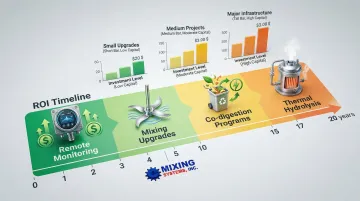
Typical payback periods:
- Remote monitoring systems: Under 3 years from reduced labor and prevented equipment damage
- Mixing upgrades: 3-5 years via lower energy consumption and better biogas yields
- Co-digestion programs: 10-15 years when accounting for capital improvements and operations
- Thermal hydrolysis: 15-17 years for complete THP-AD-CNG installations
Financial drivers:
- Energy savings from reduced power consumption
- Increased biogas production for on-site use or sale
- Tipping fees for accepting external organic wastes
- Improved biosolids quality enabling beneficial reuse
- Avoided capital costs from increased capacity of existing digesters
A techno-economic analysis for a THP-AD-BioCNG system estimated capital costs at $58 million with approximately 10% internal rate of return.
While major infrastructure projects require longer payback periods, they deliver sustained operational benefits and regulatory compliance. Smaller efficiency upgrades like blower replacements or mixing improvements can pay back in as little as 17 months, making them attractive first steps for facilities with limited capital budgets.
Retrofit Opportunities for Existing Facilities
Many innovations integrate into existing digester systems without major reconstruction. Strategic retrofits improve performance while avoiding the cost and disruption of complete digester replacement.
Readily retrofittable technologies:
- Advanced mixing systems including jet mixing and gas recirculation
- IoT sensors and remote monitoring platforms
- Process control systems and AI optimization
- Co-digestion receiving and feeding equipment
- Heat recovery systems for existing CHP units
Requiring more extensive modifications:
- Thermal hydrolysis (requires new pretreatment system)
- Reactor configuration changes (TPAD, acid/gas-phased)
- High-rate reactor installations
- Major structural modifications for capacity expansion
Successful retrofit examples:
- DC Water retrofitted Blue Plains with THP, reducing digester volume requirements by 50%
- Dallas TRA CRWS upgraded to advanced digestion with Cambi THP in 2023
- Multiple facilities added co-digestion capability using existing digester infrastructure
Evaluate retrofits based on current performance gaps, available capital, and operational priorities. Mixing improvements and monitoring upgrades typically deliver the fastest returns with minimal disruption.
Frequently Asked Questions
What are the most cost-effective innovations for small to mid-sized wastewater treatment plants?
Improved mixing systems reduce energy consumption by 30-40% while enhancing biogas production, with typical payback in 3-5 years. Basic IoT monitoring provides remote visibility and rapid response capability. Co-digestion with local food waste boosts energy production using existing infrastructure.
How long does it typically take to see ROI from implementing advanced digestion technologies?
Small efficiency upgrades like mixing systems and monitoring pay back in 3-5 years, while major infrastructure projects require 10-17 years. Energy savings and increased biogas production drive ROI for most technologies.
Can existing digesters be upgraded with new technologies, or is complete replacement necessary?
Most innovations can be retrofitted into existing digesters. Mixing systems, sensors, controls, and co-digestion equipment integrate easily, while thermal hydrolysis requires more extensive modifications but still uses existing vessels. Complete replacement is rarely necessary.
What role does mixing technology play in improving digester performance and energy efficiency?
Modern jet mixing systems reduce energy consumption by 30-40% compared to older mechanical mixers while ensuring uniform temperature distribution and preventing settling. They eliminate dead zones and improve substrate-microbe contact for better biogas production, with all mechanical assemblies outside tanks for easy maintenance.
How do AI and machine learning systems improve sludge digestion operations?
AI provides predictive maintenance to prevent equipment failures and continuously optimizes feeding rates and mixing intensity based on real-time conditions. Machine learning increases biogas production by 10-20% through automated adjustments while reducing operator workload.
What are the key barriers to adopting breakthrough sludge digestion technologies?
High upfront capital costs and lack of in-house expertise are the primary barriers. Regulatory uncertainty around biosolids standards and risk aversion toward unproven technologies also slow adoption. Facilities typically require demonstrated performance data before major investments.